In electrical engineering, materials science, and many high-tech fields, "leakage" is not a good sign. It may not only cause energy loss, but also affect the performance of equipment, and even pose safety hazards. To investigate the "leakage" situation of materials, there are two crucial indicators - dielectric constant and dielectric loss. Today, let's talk about these two seemingly sophisticated concepts that are actually closely related to us, and how to accurately measure them through professional instruments.
What is dielectric constant? It is related to the "energy storage" capability of the material
Simply put, the dielectric constant (usually expressed as ε r) is a physical quantity that measures the degree to which the internal electric field strength of an insulating material decreases compared to vacuum under the action of an electric field. You can imagine it as the material's' electric field storage capability '. The higher the dielectric constant of a material, the more charge it can store under the same electric field, or in other words, the stronger its "shielding" ability against electric fields.
What are the influencing factors?
Polarity of materials: Polarized molecules (such as water molecules) are easily oriented under the action of an electric field, thereby enhancing their response to the electric field and resulting in a high dielectric constant. The dielectric constant of non-polar molecules (such as polyethylene) is relatively low.
Molecular structure and density: Tightly packed molecules or molecules with specific conjugated structures often result in higher dielectric constants.
Temperature: The dielectric constant of many materials changes with increasing temperature, especially polar materials.
Frequency: Under high-frequency electric fields, the polarization response speed of molecules may not keep up with the changes in the electric field, resulting in a decrease in the effective dielectric constant.
What is dielectric loss? It represents the degree of 'energy loss'
And dielectric loss (usually represented by tan δ, i.e. the tangent of the loss angle) reflects how much electric field energy is lost in the form of thermal energy when passing through insulating materials. The dielectric constant and dielectric loss often go hand in hand, and high dielectric constant materials often come with a certain amount of energy loss, just like "fish and bear's paw", which needs to be weighed when choosing materials.
What are the influencing factors?
The conductivity of materials: Even insulating materials have weak conductivity, which can directly lead to energy loss.
Polarization loss: The process of orientation, electron or ion displacement of molecules under the action of an electric field. If they cannot respond to changes in the electric field in a timely manner, hysteresis will occur, resulting in energy loss.
Conductivity loss: The loss caused by the movement of free charges within a material under the action of an electric field.
Frequency: The higher the frequency, the greater the losses in certain polarization processes.
Temperature: An increase in temperature usually accelerates the molecular motion and charge carrier migration inside the material, resulting in increased losses.
Humidity and impurities: Moisture and impurities in materials are important factors that lead to an increase in conductivity, thereby significantly increasing dielectric loss.
The secret weapon for measuring these 'secrets': dielectric constant dielectric loss tester
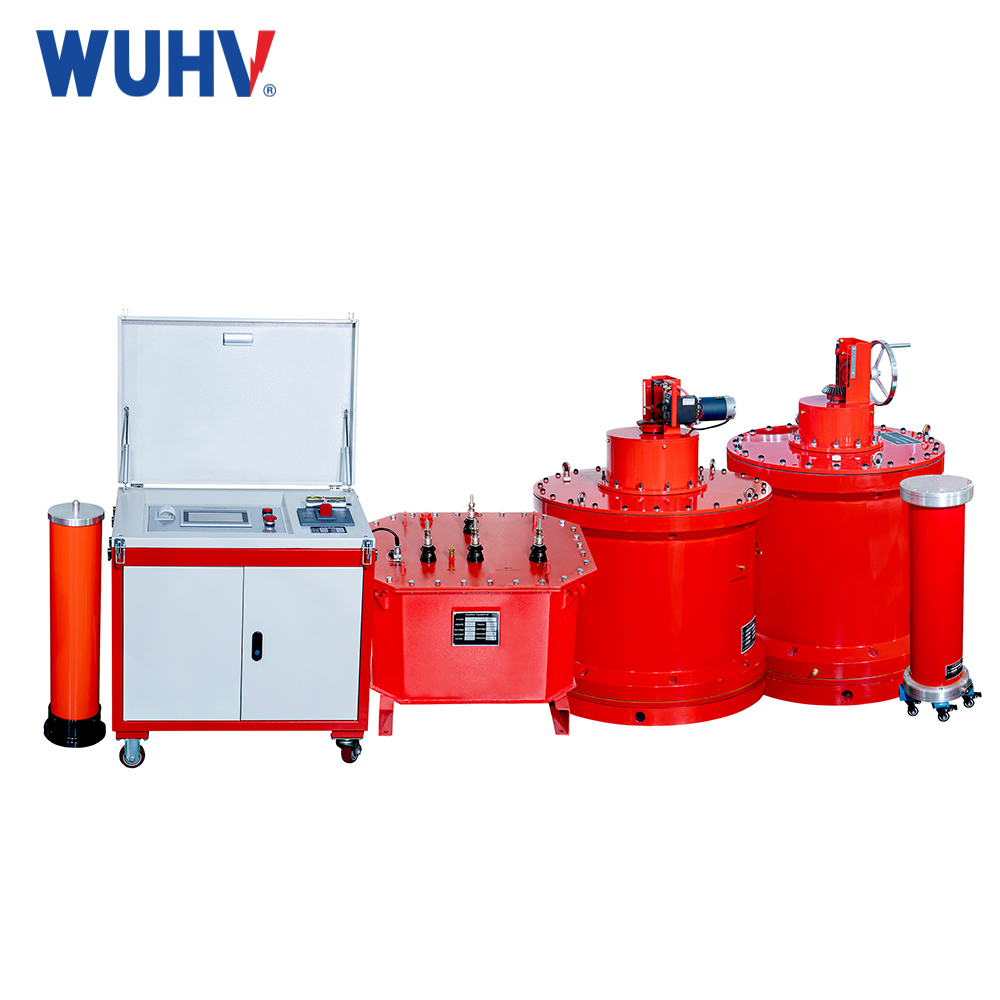
To accurately understand these characteristics of materials, professional measuring instruments such as dielectric constant and dielectric loss testers are indispensable. This type of instrument can accurately control the applied electric field (including voltage and frequency) and measure the current passing through the sample, thereby calculating the dielectric constant and dielectric loss of the material.
Wuhan UHV Power Technology Co., Ltd., as a leader in the industry, has developed and produced dielectric constant and dielectric loss measuring instruments that have excellent performance in accuracy, stability, and ease of use. They have been deeply involved in the field of power equipment for many years and have a profound understanding of the performance of insulation materials. Their products are widely used in various fields such as power equipment manufacturing, insulation material research and development, and wire and cable production, providing solid technical support for the healthy development of the industry.
How to better utilize these measurement results?
Material selection: Select suitable materials based on the insulation performance requirements of the application scenario (such as high dielectric constant required for high-voltage transformers to reduce leakage magnetic flux, but low dielectric loss required to reduce heat generation).
Quality control: In the process of material production and finished product inspection, by measuring the dielectric constant and dielectric loss, it is possible to quickly determine whether the material is qualified, whether there are process defects or impurities.
Fault diagnosis: For electrical equipment that has been put into use, if there is an abnormal change in the dielectric constant or dielectric loss of the insulation material, it may indicate material aging, moisture, or early failure.
New material research and development: When developing new insulation materials, dielectric constant and dielectric loss are key indicators for evaluating their performance and potential.
Practical application case: "Health examination" of power cables
Imagine that we are conducting pre factory dielectric performance testing on a batch of insulated cables used for high-voltage transmission lines. The staff placed a small sample of the cable insulation layer between the measuring electrodes of the dielectric constant loss tester and set the corresponding test voltage and frequency. The instrument quickly provided measurement results: the dielectric constant was within the expected range, and the dielectric loss was also very low, indicating that this batch of insulation materials has excellent performance, can effectively withstand high voltage, and minimize energy loss. On the contrary, if the measurement results show abnormally high dielectric loss, it may indicate that there is a quality problem with the cable insulation layer and further investigation is needed.
Tips for improving measurement accuracy
Sample preparation: Ensure that the thickness of the sample is uniform, the surface is smooth, and there are no bubbles or impurities, which directly affect the measurement accuracy.
Electrode selection: Use electrodes that are in good contact with the sample, and clean and calibrate the electrodes if necessary.
Environmental control: Measuring the temperature and humidity of the environment can affect the results, so try to maintain stability as much as possible.
Instrument calibration: Regularly calibrate the dielectric constant dielectric loss tester to ensure its measurement accuracy.
Choosing a reliable instrument supplier: Wuhan Ultra High Voltage Power Technology Co., Ltd. is an excellent choice for providing high-precision and high reliability instruments, which can provide strong support for your measurement work.
Dielectric constant and dielectric loss are two indispensable parameters for understanding and evaluating the performance of insulation materials. By using advanced dielectric constant loss testers, we can gain a deeper understanding of the "secrets" of materials, providing reliable data support for engineering design, quality control, and fault diagnosis. If you are looking for professional measurement solutions, you may want to follow Wuhan Ultra High Voltage Power Technology Co., Ltd. We believe that their products and technical services will definitely meet your needs.
Frequently Asked Questions (FAQ)
Q: Why does the cable heat up after prolonged use? Answer: After prolonged use, cable heating is usually caused by increased dielectric loss. This may be due to aging, moisture absorption, increased internal impurities of the insulation material, or prolonged exposure to high electric field stress, resulting in energy dissipation in the form of thermal energy within the insulation layer.
Q: Is the higher the dielectric constant, the better the material? Answer: Not necessarily. A high dielectric constant means that the material has strong "energy storage" ability, which is advantageous in certain applications such as capacitors. However, in high-voltage insulation applications, if the dielectric constant is too high and the dielectric loss increases accordingly, it may actually lead to overheating of the insulation material and a decrease in performance. A trade-off needs to be made based on specific application scenarios.
Q: What are the effects of environmental humidity on measuring dielectric loss? Answer: Environmental humidity has a significant impact on dielectric loss. Most insulation materials absorb moisture, and the introduction of moisture greatly increases the electrical conductivity of the material, thereby significantly increasing dielectric loss. Therefore, it is necessary to control the humidity of the sample before measurement and maintain the stability of the environmental humidity as much as possible during the measurement process.
Q: What types of materials can be measured by a dielectric constant dielectric loss tester? Answer: These types of instruments can usually measure the dielectric constant and dielectric loss of solid, liquid, and gas insulation materials, such as various plastics, rubber, oils, ceramics, insulation paper, etc.
Q: What are the advantages of Wuhan UHV Power Technology Co., Ltd.'s equipment in dielectric performance testing? Answer: Wuhan UHV Power Technology Co., Ltd. focuses on testing high-voltage power equipment and materials. Its dielectric constant and dielectric loss tester usually has the characteristics of high accuracy, wide frequency range, good stability, and easy operation, which can meet the needs of different scenarios such as scientific research, production, and quality inspection, and provide professional technical support.
Keywords: dielectric constant, dielectric loss, dielectric constant dielectric loss tester, electrical insulation materials, high-voltage insulation, material performance testing, power equipment, loss tangent, dielectric performance testing, Wuhan Ultra High Voltage Power Technology Co., Ltd