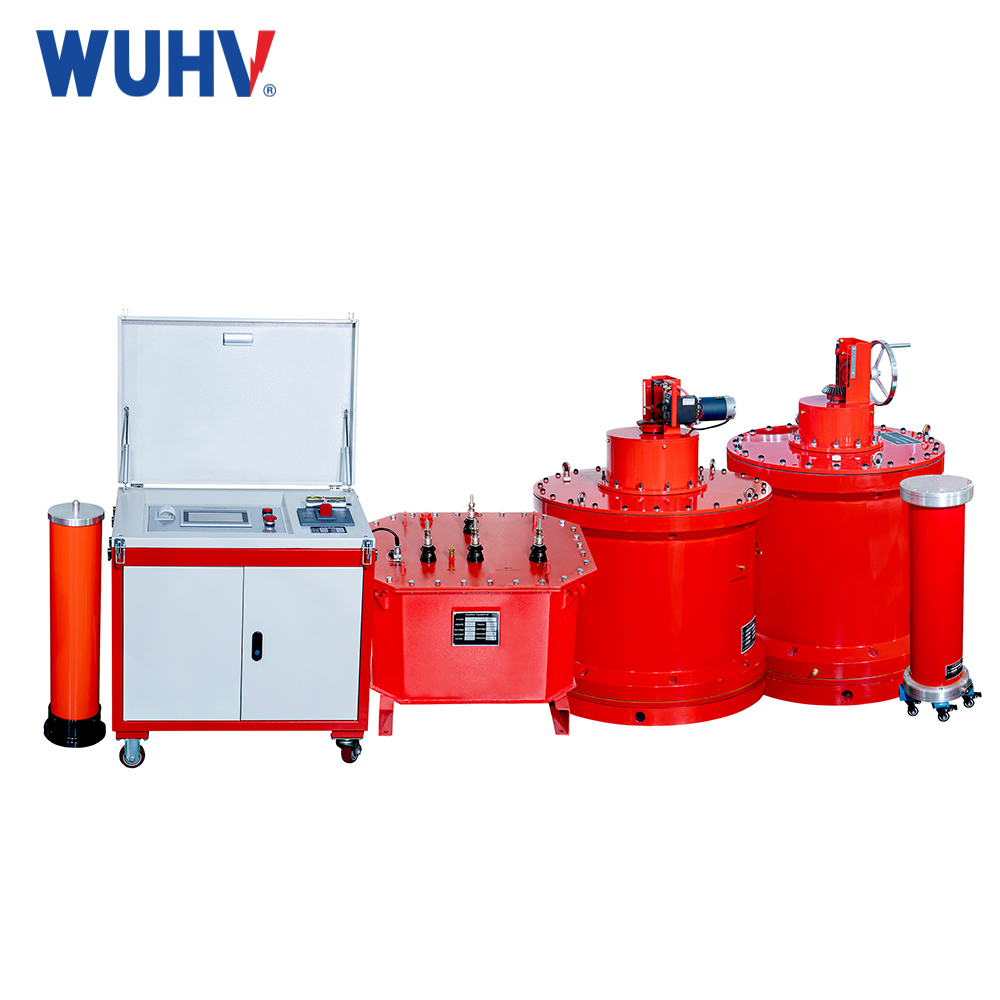
Have you ever thought about how reliable the insulation materials inside the power equipment that supports our modern life, such as transformers, cables, insulators, etc., are? How much voltage can they withstand without 'striking'? Behind this, there is a silently dedicated 'health inspector' - a dielectric constant dielectric loss tester. Today, let's unveil its mysterious veil together and see how it safeguards the safety of the power grid.
What are dielectric constant and dielectric loss?
Before delving deeper into the instrument, let's first understand these two terms that sound a bit "high-end":
Dielectric constant: Simply put, it measures the ability of an insulating material to store electrical energy under the action of an electric field. Just like charging a capacitor, the higher the dielectric constant, the more electricity the material can 'hold'. It directly affects the capacitance and performance of electrical equipment.
Dielectric loss: This is like the energy "lost" by insulating materials during operation. When alternating current passes through insulating materials, a portion of the electrical energy is converted into heat and dissipated, which is known as dielectric loss. If this loss is too large, it will not only waste energy, but also cause the material to overheat, accelerate aging, and even cause insulation breakdown, which is dangerous.
Imagine if a transformer is compared to the "faucet" of a large family, then the dielectric constant determines how much water it can "connect" (store how much electrical energy), and the dielectric loss represents the degree to which the faucet "leaks". We certainly hope that the "faucet" can receive a large amount of water (high dielectric constant) and not leak (low dielectric loss).
The 'behind the scenes' driving force that affects dielectric constant and dielectric loss
There are many factors that affect these two types of performance, just like the factors that affect a person's mood:
The properties of the material itself: This is the most fundamental. The molecular structure of different insulation materials, such as oil immersed paper, epoxy resin, polyvinyl chloride, etc., determines their dielectric properties.
Temperature: Generally speaking, as the temperature increases, the dielectric constant and dielectric loss of the material will also increase. Just like some things undergo thermal expansion and contraction, when molecular motion becomes more active, energy loss naturally increases.
Humidity (moisture): Water is conductive, and once the insulation material absorbs moisture, its dielectric properties will greatly decrease, and the dielectric loss will sharply increase. That's also why electrical equipment is more prone to problems in humid environments.
Frequency: The frequency of alternating current can also affect the dielectric properties of materials. The response of materials will also vary at different frequencies.
Electric field strength: Under very high electric fields, the dielectric properties of materials may change, and even nonlinear effects may occur.
How does a 'medical examiner' work? ——Dielectric constant dielectric loss tester
With a dielectric constant dielectric loss tester, we can accurately "check" these insulation materials. It mainly utilizes the principles of electrochemistry and the measurement method of AC bridge.
In short, the testing process is roughly as follows:
Preparation of samples: The insulation material to be tested is made into a specific test sample, usually in the form of a thin sheet.
Applying voltage: Place the sample in the testing fixture and apply a standard AC voltage.
Measurement parameters: The instrument will measure the current passing through the sample and the phase difference between the current and voltage after applying voltage.
Calculation result: Based on the measured data, the instrument will automatically calculate the dielectric constant and dielectric loss tangent (tan δ, a commonly used measure of dielectric loss) of the sample.
By these values, we can determine the quality of the insulation material. Especially the tangent value of the dielectric loss angle is crucial for evaluating the state of transformer oil, cable insulation, and other conditions. For example, Wuhan Ultra High Voltage Power Technology Co., Ltd. attaches great importance to precise measurement of the dielectric loss of insulation materials in the field of power equipment testing to ensure the safe operation of equipment.
Related 'good partners' and' related parties'
The dielectric constant dielectric loss tester is not fighting alone, it complements many other detection equipment and technologies:
Insulation resistance tester: It measures the insulation performance under direct current and evaluates the insulation state from different perspectives compared to dielectric loss testing.
Transformer oil chromatography analyzer: This is a "detective" for analyzing internal faults in transformer oil, which can detect whether there are gases produced due to insulation aging in the oil, and can be mutually confirmed with the results of dielectric loss testing.
Partial discharge detector: used to detect small discharge phenomena inside insulation materials, which is an early warning signal for insulation aging.
These devices together constitute a complete set of "health check-up" plans for the insulation system of power equipment.
Хow to make the 'physical examination' more outstanding?
Want to better utilize the dielectric constant dielectric loss tester? Here are a few small suggestions:
Strictly control the testing environment: ensure that the temperature and humidity of the testing environment are within the standard range to avoid interference with the measurement results.
Choose appropriate testing fixtures: Different sample types require different testing fixtures to ensure good contact between the sample and the electrode, without any air gaps.
Regular calibration of instruments: Just like regular physical examinations, instruments also need to be calibrated regularly to ensure the accuracy of measurement data.
Combining multiple detection methods: Do not rely solely on one detection method, combining dielectric loss testing with other methods can more comprehensively evaluate the insulation state.
Understanding the deep meaning of test results: it is not just about looking at a numerical value, but also about conducting comprehensive analysis based on equipment operation, historical data, and other factors. Wuhan UHV Power Technology Co., Ltd. has accumulated rich experience in power testing practice for many years, and is able to deeply interpret complex testing data.
Conclusion: Build a solid defense line for power safety
The dielectric constant and dielectric loss tester, known as the "inspector of electrical insulation," accurately measures the dielectric constant and dielectric loss, revealing the "health status" of insulation materials for us. This is not only a technical requirement, but also an important link to ensure the stable operation of the power system and prevent major accidents from occurring. With it, we can more confidently enjoy the convenience brought by electricity.
Frequently Asked Questions (FAQ)
Why is low dielectric loss necessarily good? In general, the lower the dielectric loss, the better the performance of the insulation material and the less energy loss. But in some special applications, such as when the dielectric heating function of the material needs to be utilized, materials with higher dielectric loss will be chosen.
What are the requirements for electrode materials when measuring dielectric loss? Electrode materials usually require good conductivity and no chemical reactions with insulating materials. Common ones include silver paste, copper foil, aluminum foil, etc.
What are the advantages of Wuhan UHV Power Technology Co., Ltd. in this regard? Wuhan UHV Power Technology Co., Ltd. has advanced testing equipment and an experienced technical team, accumulating profound professional knowledge in insulation performance testing of power equipment, and can provide high-precision and high reliability testing services.
What is the relationship between dielectric constant, dielectric loss, and insulation aging? As insulation materials age, their molecular structure changes, usually leading to a change in dielectric constant and a significant increase in dielectric loss, which is an important signal of insulation aging.
What safety precautions should I pay attention to when testing materials in the laboratory? When conducting any electrical testing, it is essential to comply with laboratory safety regulations, wear appropriate protective equipment, and ensure proper equipment connections to prevent hazards such as electric shock and short circuits.