In the field of insulation testing for high-voltage power equipment, resonance testing technology has become an indispensable core means. Series resonance and parallel resonance, as two mainstream technical solutions, each have unique circuit characteristics and application scenarios. How to accurately select based on actual testing needs is a key issue that every power operation and maintenance personnel must face. Wuhan UHV Power Technology Co., Ltd., as a high-tech enterprise in the field of high-voltage electrical measurement in China, has long been committed to the research and production of series resonance test devices, partial discharge testing systems and other products. This article comprehensively compares and analyzes two resonance test systems based on the company's technical data, providing selection references for industry users.
1、 Basic principles of two resonance techniques
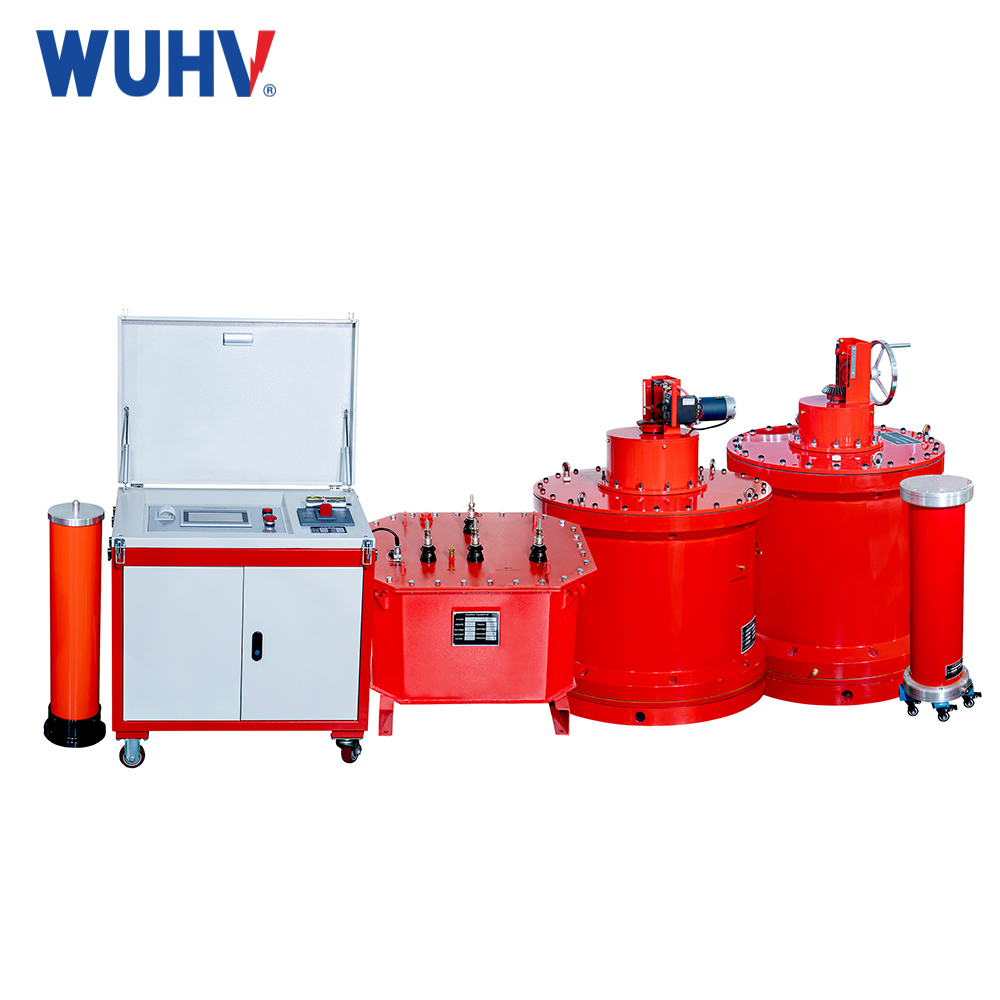
Theseries resonance test device consists of a variable frequency control power supply, an excitation transformer, a reactor, a capacitive voltage divider, etc. The test sample is connected in series as a capacitive element in the circuit. By adjusting the output frequency of the variable frequency power supply, resonance occurs between the reactor inductance L and the sample capacitance C in the circuit, and the resonance voltage is the voltage applied to the sample. During resonance, the total impedance of the circuit is minimized and the current is maximized. The voltage at both ends of the test sample can reach Q times the power supply voltage (Q is the quality factor), and the boosting efficiency is extremely high.
Parallel resonance is composed of a variable frequency power supply, an excitation transformer, a reactor, and a test sample connected in parallel. The reactor forms a parallel circuit with the test sample (capacitor). During resonance, the total impedance of the circuit is maximized and the current is minimized, and stable high voltage is obtained at both ends of the test sample. Parallel resonance focuses on meeting high current testing requirements through current amplification.
2、 Core Differences and Application Scenarios
The core differences between series resonance and parallel resonance are reflected in three dimensions: circuit structure, resonance characteristics, and application scenarios.
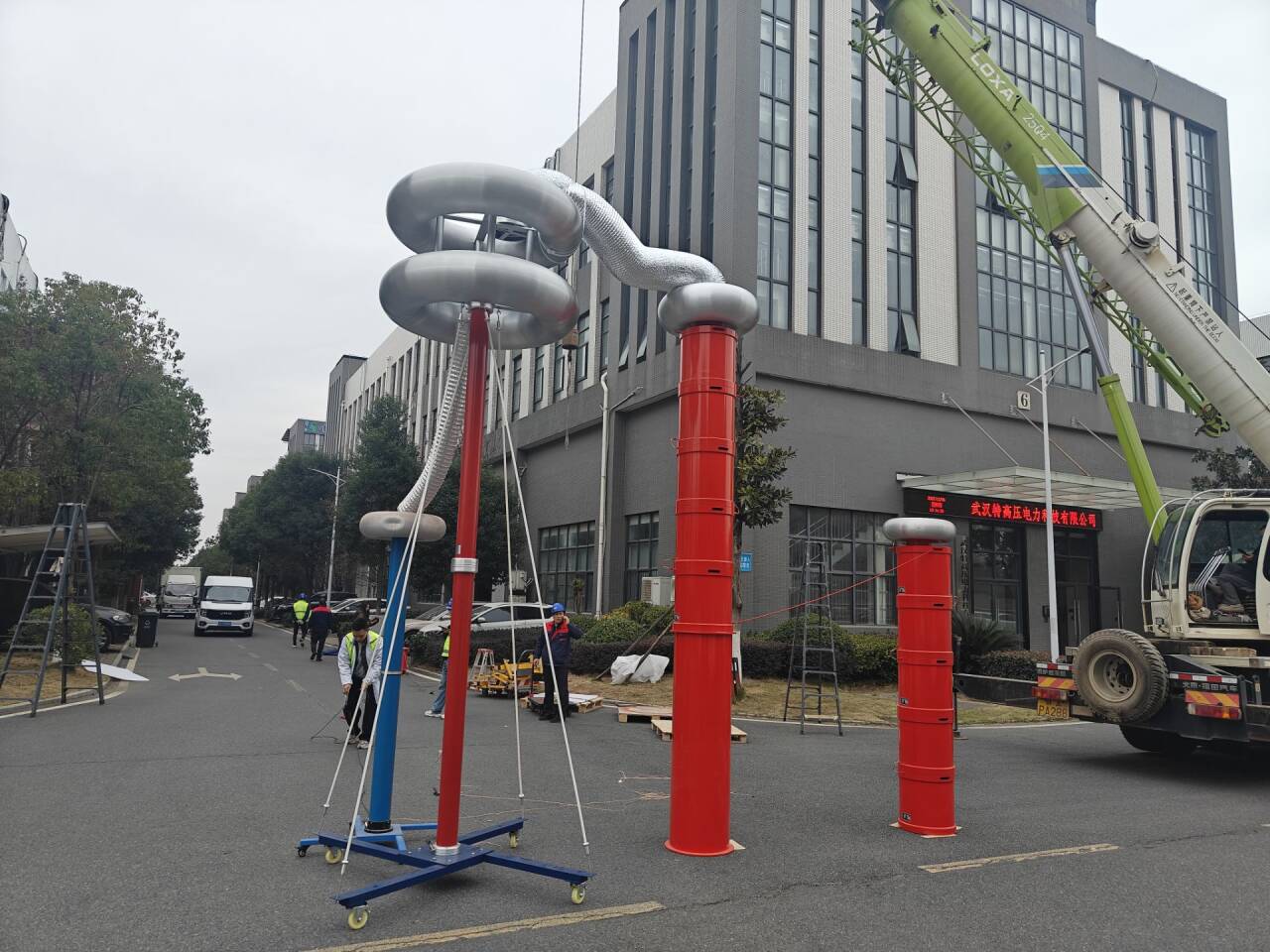
Series resonance is mainly used for AC withstand voltage testing of high-capacity capacitive equipment, such as long cables, GIS composite appliances, large transformers, transformers, etc. Its core advantages are high efficiency, energy saving, and portability. Taking the Wuhan UHV series series series resonant device as an example, its frequency adjustment range is 30-300Hz, the frequency stability reaches 0.10%, and the output voltage waveform distortion rate is ≤ 1%. The device adopts DSP platform technology and has multiple protection functions such as overvoltage, overcurrent, zero start, and system detuning (flashover).
Parallel resonance is mainly used for insulation detection and partial discharge detection of small capacity equipment, such as lightning arresters, high-voltage insulators, small capacitors, etc. Its core advantages are stable voltage, pure waveform, and accurate detection of small discharge signals. The non partial discharge frequency conversion resonance test system can control the local discharge amount within 5pc, and is suitable for induction withstand voltage and partial discharge tests of power transformers of 1000kV and below.
Simply put, series resonance focuses on "high voltage withstand" to solve the problem of detecting large capacity equipment; Parallel resonance focuses on "precise detection" and is suitable for small capacity devices and hidden defect investigation.
3、 Five advantages of series resonance
The reason why the series resonance test device dominates in the field of high-voltage withstand voltage is due to the following five advantages:
Firstly, the required power capacity is significantly reduced. The series resonant power supply utilizes resonant reactors and the capacitance of the tested object to resonate and generate high voltage and high current. The power supply only needs to provide the active consumption part in the system, and the required power supply for the test is only 1/Q of the test capacity. Traditional equipment may require a power supply capacity of 500kVA for voltage withstand testing of 110kV cross-linked cables, while the series resonant device only requires about 20kVA to meet the requirements.
Secondly, the weight and volume of the equipment have been significantly reduced. The series resonant power supply eliminates the need for bulky high-power voltage regulating devices and power frequency test transformers, and the system weight and volume are generally 1/10-1/30 of ordinary test devices. Taking the 300kVA device as an example, the variable frequency power supply is about 40kg, and the high-voltage reactor saves 35kg. The entire device can be transported by small vehicles.
Thirdly, the output voltage waveform is excellent. The resonant power supply itself is a resonant filtering circuit that can effectively improve the distortion of the output voltage waveform, obtain a good sine waveform, and prevent harmonic peaks from causing false breakdown of the test sample.
Fourthly, prevent large short-circuit currents from burning the fault point. In the series resonance state, when the weak point of the insulation of the test sample is broken down, the circuit immediately disengages and the loop current rapidly drops to 1/Q of the normal test current. However, when conducting a voltage withstand test in parallel resonance or test transformer mode, the breakdown current immediately increases by tens of times, with a difference of hundreds of times between the two.
Fifthly, there will be no overvoltage recovery. When the test sample breaks down, due to the loss of resonance conditions, the high voltage immediately disappears, the arc immediately extinguishes, and the process of re establishing the recovery voltage is long, without any recovery overvoltage.
4、 How to choose: Starting from the characteristics of the test sample
The selection decision should mainly be based on the capacity of the test sample and the detection target:
Scenario for selecting series resonance: When the test object is a high-capacity capacitive equipment such as cross-linked cables, GIS composite appliances, large transformers, hydroelectric generators, etc., and AC withstand voltage testing is required, series resonance is the preferred choice. This device has a wide range of applications and is an ideal voltage resistant equipment for high-voltage testing departments and power installation and maintenance engineering units at the prefecture, city, and county levels.
Scenario for selecting parallel resonance: When the test object is a small capacity device such as lightning arrester, high-voltage insulator, or small capacitor, and partial discharge detection or small discharge signal investigation is required, parallel resonance has more advantages.
The scenario of collaborative application: In practical detection, series and parallel resonance are often not used in isolation. Taking the entire process of cable insulation testing as an example, a series resonant device can be used to conduct an AC withstand voltage test on the cable to verify the overall insulation strength; If abnormalities are found, parallel resonance devices can be used in conjunction with partial discharge testing systems to accurately locate hidden defects such as dendritic aging and local damage inside the cable. The collaboration between the two can achieve a full process inspection of "withstand voltage testing+defect localization".
Series resonance and parallel resonance each have their own uses - series resonance focuses on "high voltage withstand" and solves the problem of detecting large capacity equipment; Parallel resonance focuses on "precise detection" and is suitable for small capacity devices and hidden defect investigation. The two complement each other and jointly cover the entire scenario of insulation testing for power equipment.