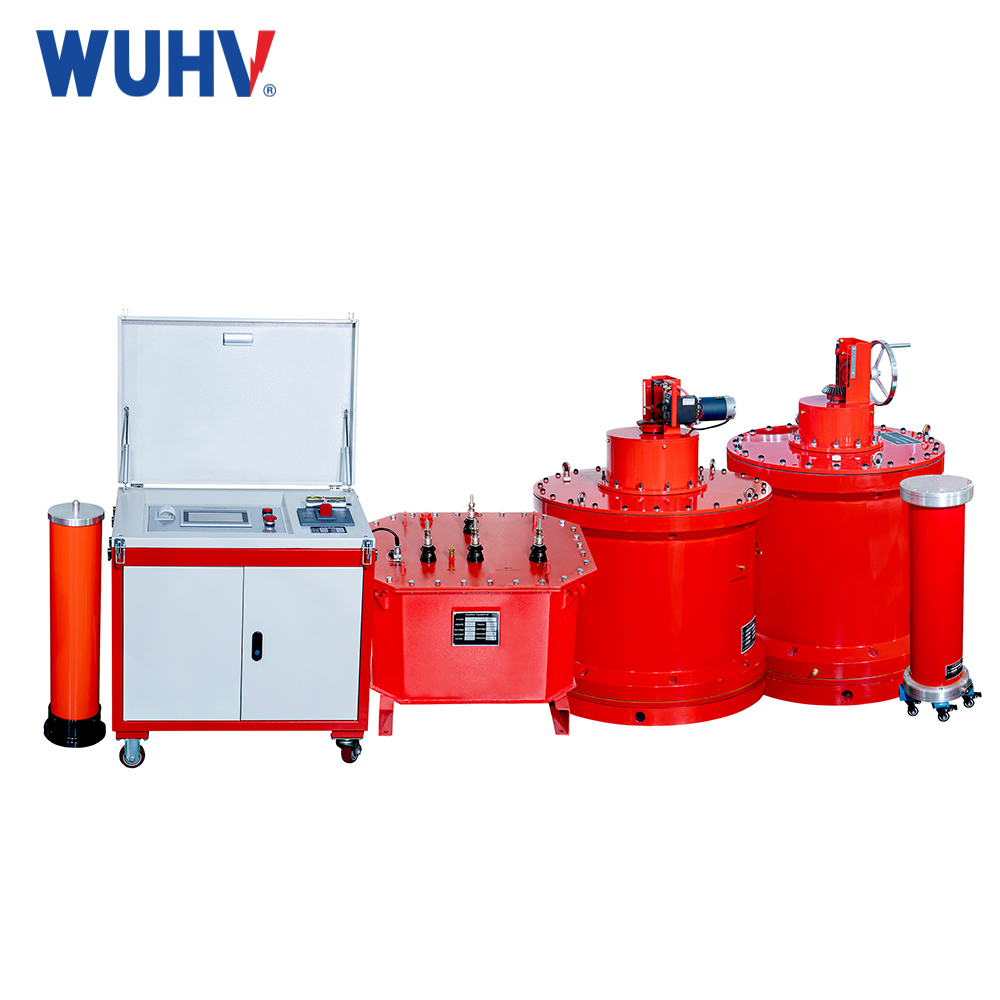
In the field of high-voltage testing in power systems, series resonance testing devices have become the mainstream choice for conducting AC withstand voltage tests on large capacity and high-voltage capacitive specimens. However, how to accurately calculate the required capacity of AC resonance testing systems has always been a technical challenge that troubles many power workers. Wuhan UHV Power Technology Co., Ltd., as a high-tech enterprise in the field of high-voltage electrical measurement in China, has systematically sorted out the core methods and selection points of capacity calculation based on years of research and production experience in series resonance test devices.
1、 The core formula for capacity calculation
The capacity calculation of the AC resonance testing system is based on the LC series resonance principle. When the inductive reactance in the circuit is equal to the capacitive reactance, the system enters a resonant state, and the power supply only needs to provide a small excitation voltage to generate a high voltage several times the power supply voltage on the test object. The general engineering calculation formula for the required capacity of the system is:
P = 2πf · C · U² × 10⁻³ (kVA)
Among them, P is the required test capacity (kVA), f is the resonant test frequency (Hz, the conventional range is 30-300Hz), C is the equivalent capacitance of the test sample (μ F), and U is the test voltage (kV).
In addition, the calculation of experimental current is also an important basis for determining capacity, and the formula is:
I = 2πf · C · U × 10⁻³ (A)
2、 Method for obtaining key parameters
1. Determination of test voltage (U)
The test voltage should be determined based on the rated voltage of the tested equipment and the corresponding test standards.
2. Obtaining the capacitance (C) of the test sample
The capacitance is determined by the type of device. For power cables, it is necessary to consult cable technical data to obtain the unit length capacitance (μ F/km), and then multiply it by the cable length to obtain the total electrical capacity. There are significant differences among different types of cables: the capacitance of 10kV XLPE cable with a cross-sectional area of 120mm ² is about 0.19 μ F/km, and that with a cross-sectional area of 400mm ² is about 0.41 μ F/km; The capacitance of a 35kV cable is approximately 0.5-1 μ F per kilometer. For equipment such as transformers, the winding capacitance is usually within the range of 1-10 nF for small transformers and 10-100 nF for large main transformers.
3. Selection of resonant frequency (f)
The working frequency of the variable frequency series resonant device is generally 30-300Hz. In actual testing, the capacitance of the tested equipment is measured before the experiment, and the theoretical resonant frequency range is calculated according to the formula. Then, the intelligent frequency scanning program is started to find the optimal working point.
3、 Capacity calculation steps and examples
Taking the AC withstand voltage test of 35kV, 630mm ² and below, and 6km cables as an example: capacitance ≤ 1.519 μ F, test frequency 30-300Hz, test voltage 52kV. Substitute the required capacity into the formula and determine the final capacity configuration of the device by combining the series parallel combination of reactors. In practical engineering selection, safety margin should also be considered, usually multiplying the calculation results by a safety factor of 1.2 to 1.5 times. In addition, the ground stray capacitance of test lines and equipment can also affect actual demand, so the device capacity should be slightly larger than the calculated result.
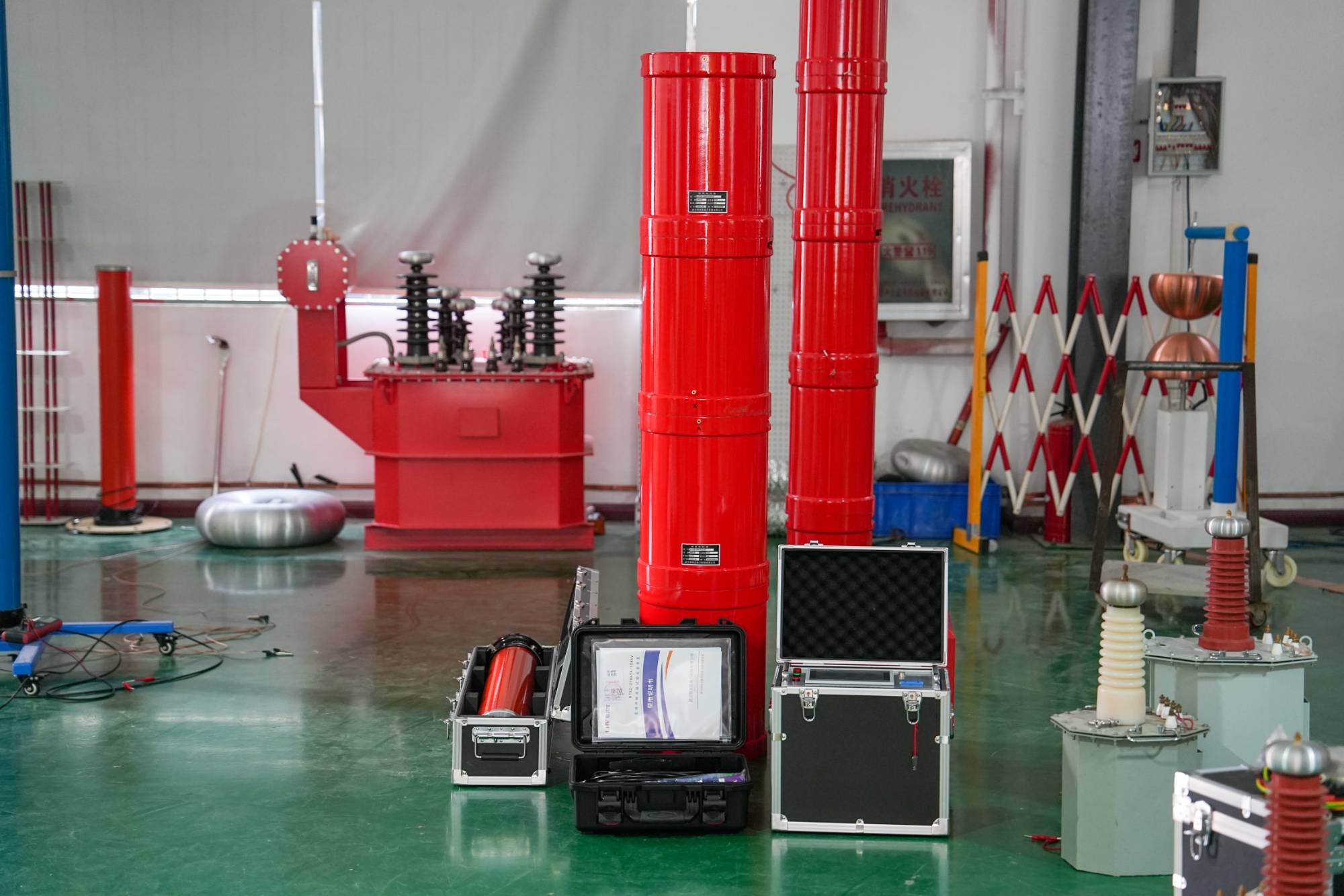
The rated capacity range of the Wuhan UHV series resonant device is 75kVA to 10000kVA (customizable), with a maximum rated voltage of 800kV (customizable) and a working frequency of 30-300Hz. The device adopts a modular reactor design and can be flexibly combined in series and parallel according to the capacitance requirements of the test sample.
4、 Selection precautions
1. Capacity margin principle: The calculated maximum test current must be less than the rated current of the device reactor, and it is usually recommended to leave a safety margin of 1.1-1.2 times. Insufficient capacity margin can result in inability to boost voltage or equipment protection shutdown.
2. Advantages of resonance compensation: The series resonant power supply generates high voltage and high current through resonance between the resonant reactor and the tested capacitor. The power supply only needs to provide the active consumption part in the system, and the required power for the test is only 1/Q of the test capacity (Q is the quality factor). Due to full compensation of resonant reactive power, the power of the power supply and equipment is only less than 1/10 of the required capacity of the tested object (1/Q>10).
3. Waveform quality assurance: Series resonance is actually a current filtering circuit, and the waveform distortion rate (THD) of the output voltage is extremely small, which is superior to all types of existing AC withstand voltage equipment. The output waveform of the Wuhan UHV series resonant device is a sine wave, and the waveform distortion rate is controlled within 1%.
4. Complete protection function: The device has protection functions such as overvoltage, overcurrent, zero start, and system detuning (flashover). The short-circuit current after flashover or breakdown of the test sample is only 1/10 or less (1/Q) of the test current before the short-circuit, which can effectively prevent the expansion of damage to the fault point after breakdown.
Wuhan UHV reminds power workers that correctly calculating the capacity of the AC resonance testing system is a key prerequisite for ensuring the smooth completion of the test. It is recommended to fully understand the parameters of the tested equipment before selection, strictly calculate according to the formula, and leave sufficient safety margin.