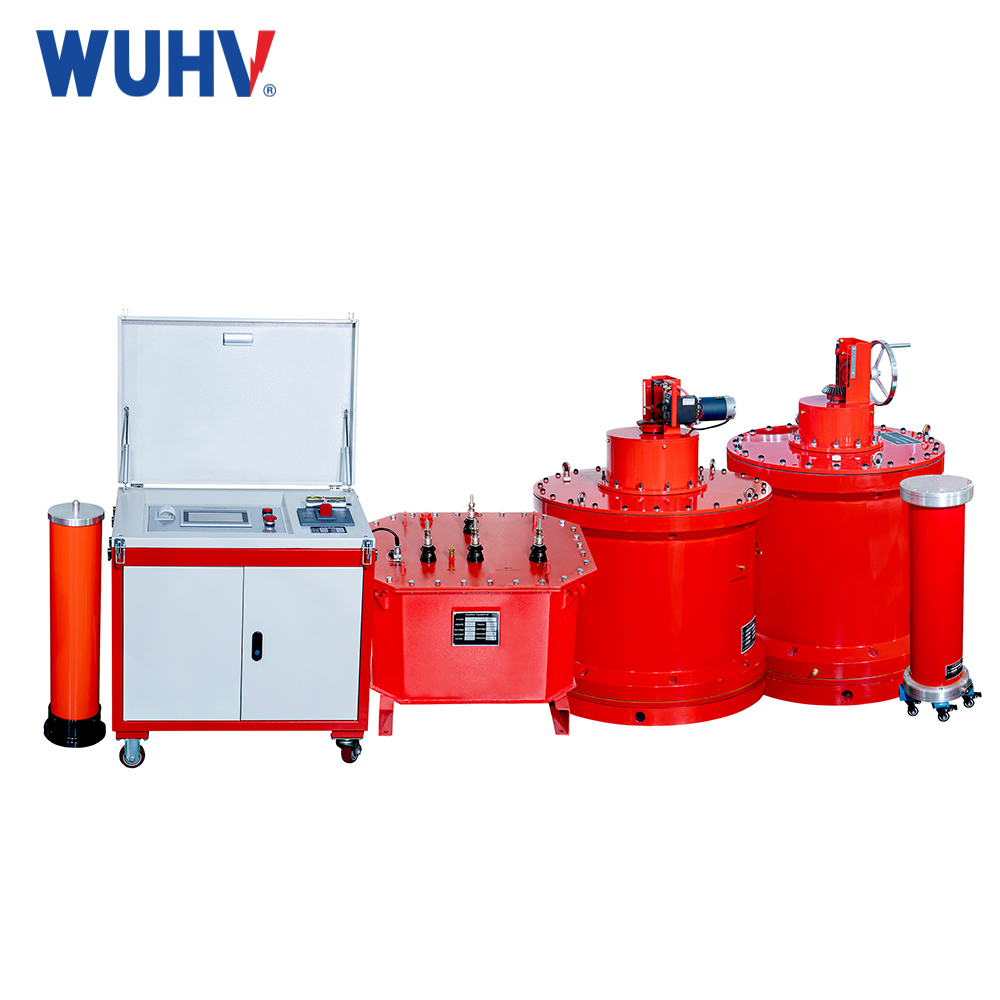
In today's increasingly normalized maintenance of power equipment, partial discharge detection has become one of the most direct means of discovering insulation hazards. But faced with a large number of products in the market, from handheld inspection devices to multi-channel complete systems, the practical problem faced by on-site operation and maintenance personnel is often not "whether to test", but "what to test and how to choose".
First, distinguish between two types of scenarios: quantitative testing and live inspection
The first step in selecting partial discharge equipment is to differentiate the usage scenarios. One type is quantitative measurement in type testing, factory testing, and handover testing, which has clear measurement requirements for sensitivity, range, and linearity. The other type is live inspection of equipment in operation, with the core requirement of rapid screening and preliminary positioning, and higher requirements for portability and anti-interference ability.
The product layout of Wuhan UHV precisely covers these two types of scenarios. The UHV-2000B partial discharge tester is positioned as a digital quantitative testing equipment, adopting an integrated machine design, with a detection sensitivity of less than 1pC and a measurement range covering 0.01pC to 10000nC, meeting the accuracy requirements of handover and factory tests. The UHV-8003 partial discharge inspection device is designed for live detection of GIS, switchgear, transformers, and power cables. It is handheld and weighs only 0.4kg, making it suitable for on-site inspection operations.
Sensitivity and anti-interference: a pair of indicators that need to be balanced simultaneously
The most challenging problem in on-site diagnosis is not weak signals, but strong interference. There are a large amount of electromagnetic noise, mechanical vibration, and power harmonics in the substation environment. If the equipment only pursues sensitivity and ignores anti-interference, the on-site data often cannot be interpreted.
UHV-2000B is equipped with various anti-interference technologies such as time window method, phase window masking method, pulse smoothing method, etc., while achieving sensitivity of less than 1pC. Combined with programmable filters for segmentation (with a lower limit frequency of 10kHz to 80kHz and an upper limit frequency of 100kHz to 1MHz), it can effectively strip interference signals under complex field conditions. This combination of "high sensitivity+multiple anti-interference methods" is a basic quality that on-site quantitative testing equipment must possess.
For inspection equipment, the test of anti-interference ability is more direct. The TEV measurement frequency band of UHV-8003 is 3~100MHz, the UHF detection frequency band covers 300~2000MHz, and the HFCT detection frequency is 1~30MHz. Multiple frequency bands are collected in parallel to reduce the risk of misjudgment caused by interference in a single frequency band.
Selection of detection methods: There is no universal solution, only scene adaptation
The current mainstream partial discharge detection technologies can be divided into four categories: transient earth voltage (TEV), ultrasonic (AE), ultra-high frequency (UHF), and high-frequency current (HFCT), each with different physical mechanisms and applicable objects. The daily inspection of switchgear usually uses a combination of TEV and ultrasonic waves as the "golden configuration", because TEV detection speed is fast, and a single switchgear only takes about 10 seconds. Ultrasonic waves are good at locating suspended discharges and cable joint defects inside the cabinet. The partial discharge detection of GIS equipment relies more on the UHF method, as the electromagnetic wave signals generated by internal discharge have obvious characteristics in the frequency band above 300MHz. The application of HFCT and high-frequency pulse current method is more common in partial discharge detection of transformers and power cables.
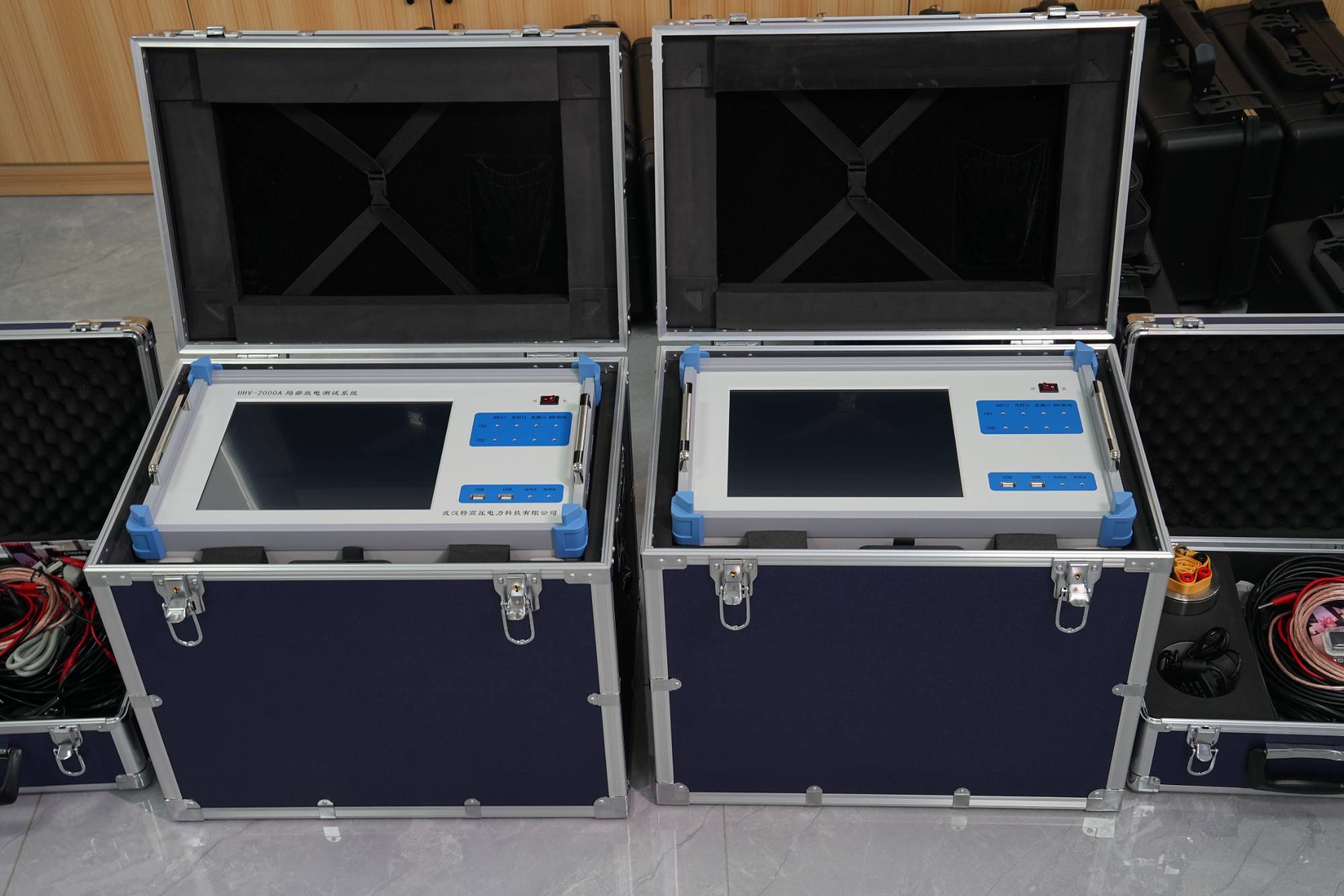
This means that when selecting, we should not pursue "one device can handle all scenarios", but should determine the core detection method based on the main detection object. UHV-8003 adopts a design that integrates four methods: ground wave, ultrasonic, ultra-high frequency, and high-frequency current. By replacing sensors to adapt to different equipment types, it can reduce the burden of carrying multiple instruments in practical use. For units whose main task is transformer handover testing, the UHV-2000A partial discharge complete set device provides 2-channel independent acquisition with a maximum sampling rate of 10M, supporting three modes of partial discharge measurement, positioning, and online monitoring, which is closer to the needs of fixed test scenarios.
Two dimensions that are easily overlooked during selection
One is the ability to analyze data. The value of on-site diagnosis lies not in the collection of discharge signals, but in the ability to identify discharge types and determine the severity from PRPD and PRPS spectra. Whether the equipment provides time-domain waveform and multi-mode spectrum analysis, and whether it supports automatic generation of test reports, directly affects the work efficiency of on-site personnel. The second is scalability. If only the handover test needs to be completed currently, but online monitoring may be carried out in the future, choosing a complete system that supports functional upgrades is more cost-effective than purchasing multiple devices separately. The online monitoring function of UHV-2000A is an optional module, leaving space for future functional expansion.
The selection of partial discharge equipment is essentially a balance between standard compliance, on-site adaptability, and long-term operating costs. The product system of Wuhan UHV covers the main scenarios of on-site diagnosis, from quantitative testing to live inspection, from handheld single machines to multi-channel complete sets of equipment. Its ideas are worth referring to for operation and procurement personnel when selecting equipment.