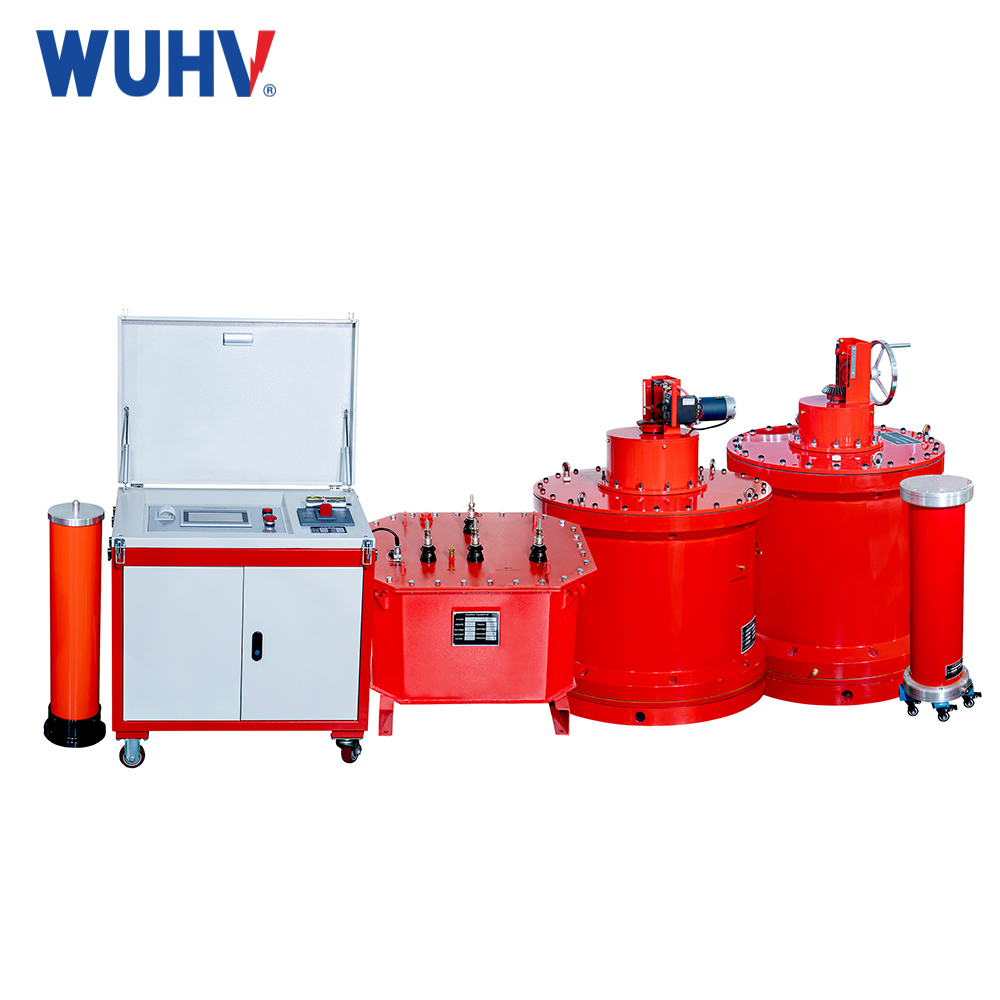
The switching process of an on load tap changer is usually completed within a few tens of milliseconds. The disconnection of contacts, the introduction of transition resistors, and the reconnection of contacts all occur in an instant where the naked eye cannot react. Traditional DC resistance testing can only provide a static resistance value after the switching is complete, and it knows almost nothing about what happens during the switching process. And what the dynamic resistance measurement system needs to answer is precisely 'what happened during the process'. This determines that when selecting a device, one cannot only look at the nominal static accuracy value, but must start from the underlying logic of the measurement principle.
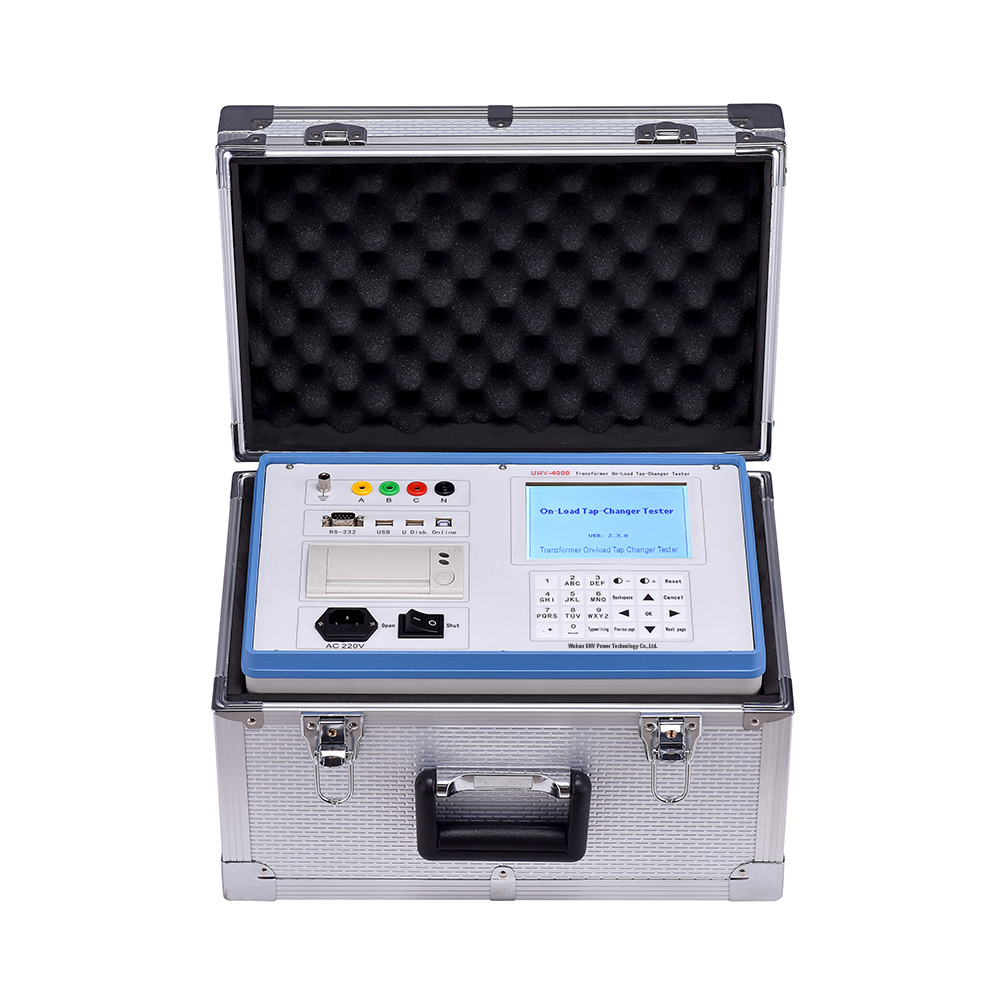
The core of dynamic resistance measurement is to continuously inject a constant current test signal throughout the entire process of switch action, synchronously record the changes in circuit voltage drop, and thus restore the dynamic curve of resistance over time. The transformer on load tap changer tester of Wuhan UHV Power Technology Co., Ltd. adopts this technical route, with a resistance measurement range covering 10 μ Ω to 2 Ω, a time resolution of 0.1ms, and a sampling rate of 100kHz. The relationship between these parameters is worth noting: a 100kHz sampling rate means collecting one data point every 10 microseconds, and for a switching process lasting only a few tens of milliseconds, such a sampling density can ensure that the waveform does not lose key details. If the sampling rate is insufficient, the sudden change in instantaneous resistance during the switching process is likely to be smoothed out, and a seemingly stable segment on the waveform may actually hide contact bounce or abnormal transition resistance.
Another dimension that is easily overlooked when selecting is synchronous collection capability. The three-phase switching of the on load tap changer is not strictly synchronized, and there is a millisecond level time difference between the actions of each phase contact. If the measurement system can only measure phase by phase, it cannot determine the synchronicity of the three phases, nor can it analyze the mechanical coordination state during the switching process by superimposing and comparing the three-phase waveforms. The on load tap changer tester for Wuhan UHV is equipped with three-phase synchronous measurement function, with a transition time range covering 0 to 200ms and an accuracy control of ± 0.1ms. For scenarios with large load fluctuations and frequent tap changer actions such as chemical and metallurgical industries, the deviation of three-phase synchronicity is often an early signal of contact wear or abnormal transmission mechanism.
The on-site electromagnetic environment is another factor that should be considered during the selection stage. The frequency converters and rectification equipment in substations and chemical plants generate a large amount of harmonics, which are directly coupled into the microvolt level voltage measurement circuit, resulting in waveform distortion. An instrument that performs well under laboratory conditions may not be able to provide reliable readings on site. Wuhan UHV explicitly states in its product description that the equipment adopts a multi-stage filtering design to resist frequency conversion harmonic interference, and will undergo testing in a simulated harmonic environment before leaving the factory. This means that when selecting, suppliers should be asked for their on-site adaptability verification methods, rather than just requesting an accuracy report under laboratory conditions.
Finally, whether the measurement system can convert the original waveform into actionable diagnostic conclusions is also worth evaluating during the selection phase. The value of a dynamic resistance curve lies not in the curve itself, but in identifying specific defect patterns such as contact erosion, spring fatigue, and transition resistance degradation from the shape, amplitude, and time characteristics of the curve. Wuhan UHV has the ability to automatically identify 8 typical defects and reconstruct the contact motion trajectory through displacement sensor data. For operation and maintenance teams lacking experience in waveform analysis, whether the system's built-in defect recognition logic covers the main failure modes of the target equipment and whether its judgment criteria are traceable directly affect whether the equipment can truly play a role in daily maintenance.
Returning to the starting point of selection: first determine what the tested object is. Is it a conventional on load tap changer for power transformers, or a vacuum on load tap changer for converter transformers? Is it dynamic monitoring of the circuit resistance of high-voltage switches, or dynamic characterization of the on resistance of GaN power devices? The switching time scale, resistance level, and electromagnetic environment of different objects vary greatly, and the corresponding sampling rate, range, and anti-interference requirements are also completely different. The "good" or "bad" of a measurement system ultimately depends on whether it matches the behavior of the device in front of you under real working conditions.