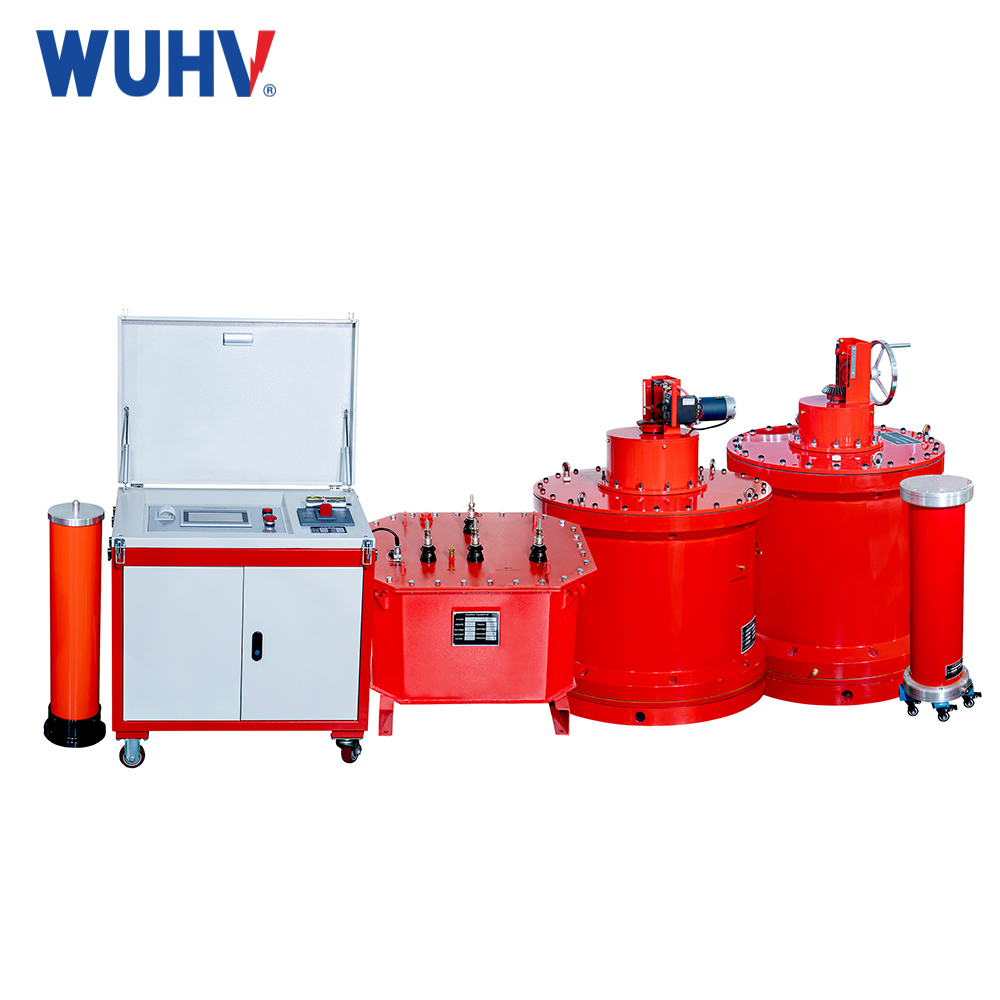
In the field of high-voltage switchgear testing, the circuit breaker testing of GIS composite electrical equipment has always been a difficult problem faced by on-site engineers. Unlike open devices, the circuit breaker contacts of GIS are completely enclosed in a metal shell filled with SF6 gas, and conventional test probes cannot touch the main contacts at all. Even more tricky is that according to safety regulations, both sides of the equipment must be reliably grounded during testing, and the grounding circuit will form a parallel path with the circuit breaker fracture. Traditional testing instruments are almost unable to capture the opening and closing action signals of the circuit breaker in this situation. Wuhan UHV Power Technology Co., Ltd. has accumulated a complete set of equipment selection ideas and on-site solutions around these challenges in more than 20 years of high-voltage electrical measurement practice.
Understand the core challenges of GIS testing
The complexity of GIS circuit breaker testing far exceeds that of traditional air insulated switchgear. The entire system is sealed in an SF6 gas environment, with strict physical contact limitations and no visible contact nodes available for traditional probe connections. The parallel circuit caused by double ended grounding makes it impossible for standard testers to "see" the opening and closing actions of the circuit breaker, as the grounding circuit is always in a closed state, and conventional signal detection methods will result in severely distorted readings.
The key to solving this problem lies in adopting the "double ended grounding" testing technology. Modern testers inject high-frequency current signals into the grounding lead and use Rogowski coils to monitor changes in current in the grounding circuit, accurately identifying the precise moment of contact separation without disconnecting any safety grounding. At the same time, many GIS grounding switches are equipped with detachable insulation grounding connectors. During testing, these connectors can be used to directly inject the test signal into the primary circuit, bypassing the shielding interference of the enclosure without damaging the system's safety grounding.
The four core dimensions of selection
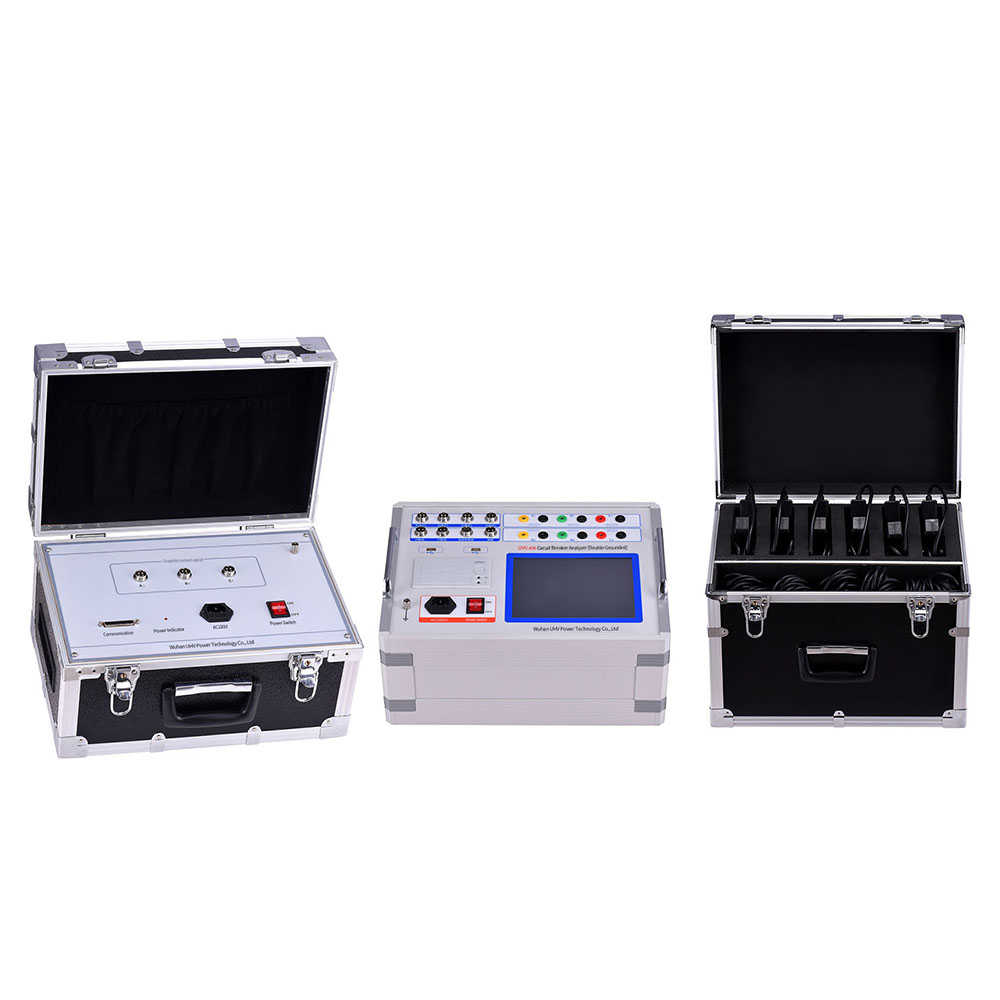
Number of channels and functional coverage. GIS circuit breakers typically adopt a three-phase split box structure, with multiple series connected faults in each phase. In addition, the testing requirements for closing resistors and graphite contacts place high demands on the number of instrument channels. Taking the UHV-406 circuit breaker test equipment of Wuhan UHV as an example, this equipment can simultaneously measure 12 metal contact fracture surfaces, 6 closing resistances, and 3 graphite contacts, and support 3 double ended grounding tests. The internal anti-interference circuit design can meet the reliable use in 800kV substations. For the handover acceptance of conventional 110kV GIS circuit breakers, the multi-channel synchronous measurement capability can simultaneously record the closing time, opening time, and three-phase periodicity of the six fractures A, B, and C in one operation, greatly improving the efficiency of on-site testing.
Time accuracy and sampling rate. The opening and closing actions of circuit breakers are transient processes in milliseconds, and the accuracy of time measurement directly determines the reference value of test data. When selecting, the inherent resolution of the instrument's opening and closing time measurement should reach the order of 0.01ms. For GIS circuit breakers with voltage levels of 550kV and above, the opening time requirement is usually not more than 30ms, and the three-phase periodicity should not exceed 2ms. The time measurement error of the tester should be prioritized within ± 0.1ms. The high voltage switch dynamic characteristic tester of Wuhan UHV has a measurement accuracy of ± 0.1ms, which meets the requirements of industry standards. Its self-developed dynamic capture algorithm can collect data at a frequency of 100000 times/second during the moment of switch action, accurately capturing subtle movements such as contact bounce.
Sensor adaptability and installation convenience. The enclosed structure of GIS equipment means that the installation space for sensors is extremely limited. When selecting, priority should be given to models that are compatible with multiple types of sensors such as photoelectric, linear, rotary, and accelerometer. The ease of sensor installation and the need for complex mechanical modifications directly affect the testing efficiency of GIS on-site. For GIS circuit breakers in narrow spaces, the installation process can be significantly simplified by equipping dedicated fixed multifunctional connectors for linear and rotary sensors.
Anti interference capability and environmental adaptability. The electromagnetic environment inside GIS substations is complex, and the electromagnetic interference generated by densely arranged high-voltage equipment and busbars may seriously affect the quality of test signal acquisition. When selecting, attention should be paid to whether the instrument uses filtering circuits to suppress high-frequency interference and whether it has physical shielding measures to protect sensitive electronic components. In addition, the on-site testing environment is constantly changing, and the instrument needs to have good environmental adaptability and portability. A sturdy casing and clear graphical interface are the basic conditions to ensure smooth testing.
Selection of matching components for circuit resistance testing
In addition to testing the mechanical characteristics of circuit breakers, measuring circuit resistance is another key detection for evaluating the contact status of internal contacts in GIS. Due to the complete closure of GIS contacts, circuit resistance becomes the only "window" for determining the health status of internal connections. For each contact point in GIS, 100A DC test current is currently the most commonly used and recognized standard at home and abroad. The UHV-H100A circuit resistance tester for Wuhan ultra-high voltage adopts new power supply technology, which can continuously output high current for a long time, with accurate measurement, stable performance, and high resolution.
Intelligent data management
The current circuit breaker testing equipment is rapidly evolving from simple parameter acquisition to intelligent diagnosis. The deep application of global multifunctional circuit breaker analyzer AI edge diagnosis, cloud edge collaboration, and multi-sensor fusion technology is driving the upgrade of equipment from parameter acquisition to fault prediction.
In this trend, the selection of instruments also needs to consider the depth of data analysis and level of intelligence. Modern testing equipment should be able to automatically draw travel time curves, speed travel curves, calculate key parameters such as average speed and rigid opening and closing speed. Some high-end models also provide standard waveform library comparison, historical data trend analysis, and over limit automatic alarm functions. The mid to high end models of Wuhan UHV are equipped with an intelligent diagnostic system that can automatically identify common problems such as opening and closing coil faults and mechanical jamming, and generate repair suggestions.
In the selection process of GIS circuit breaker testing equipment, every step from testing requirement analysis, technical parameter matching to supplier service capability evaluation needs to be judged based on actual working conditions and long-term operation and maintenance requirements. Wuhan UHV Power Technology Co., Ltd. has accumulated more than 20 years of industry experience in high-voltage switch dynamic characteristic testers, providing reliable technical support for GIS circuit breaker detection under different voltage levels and testing scenarios.