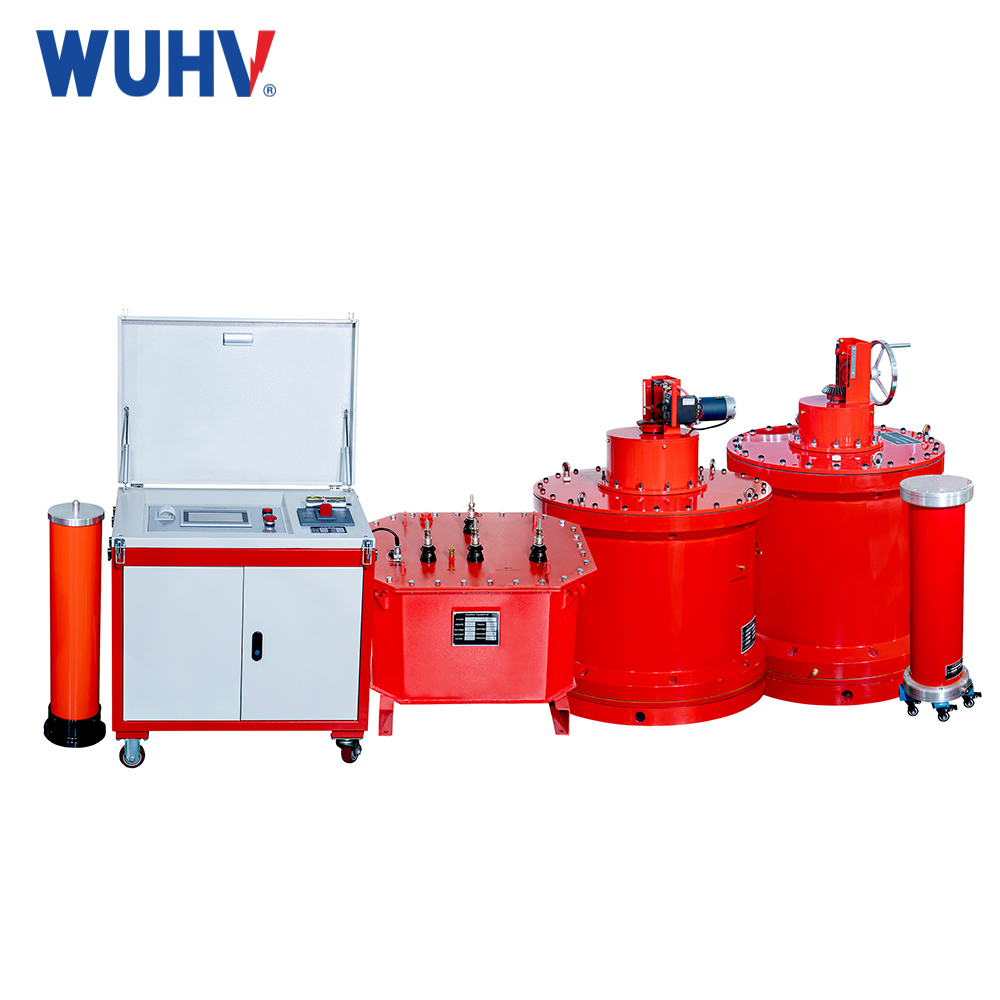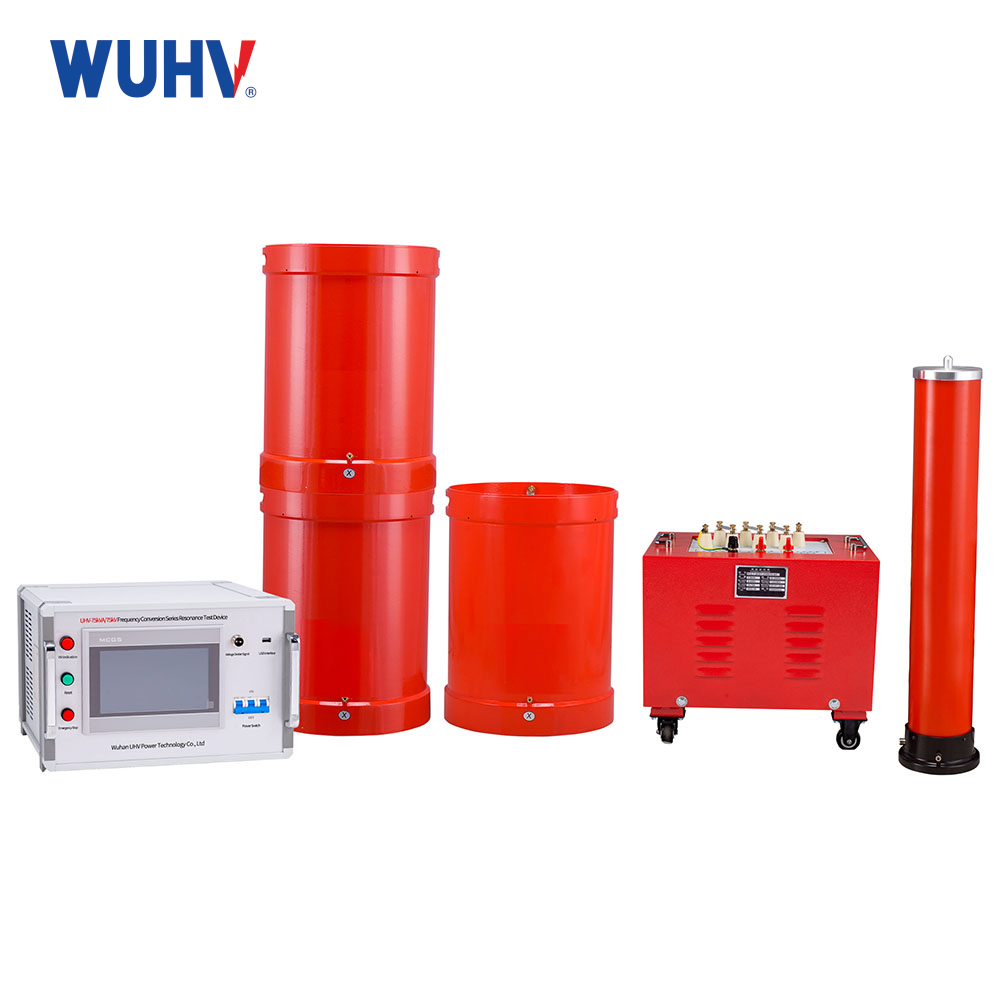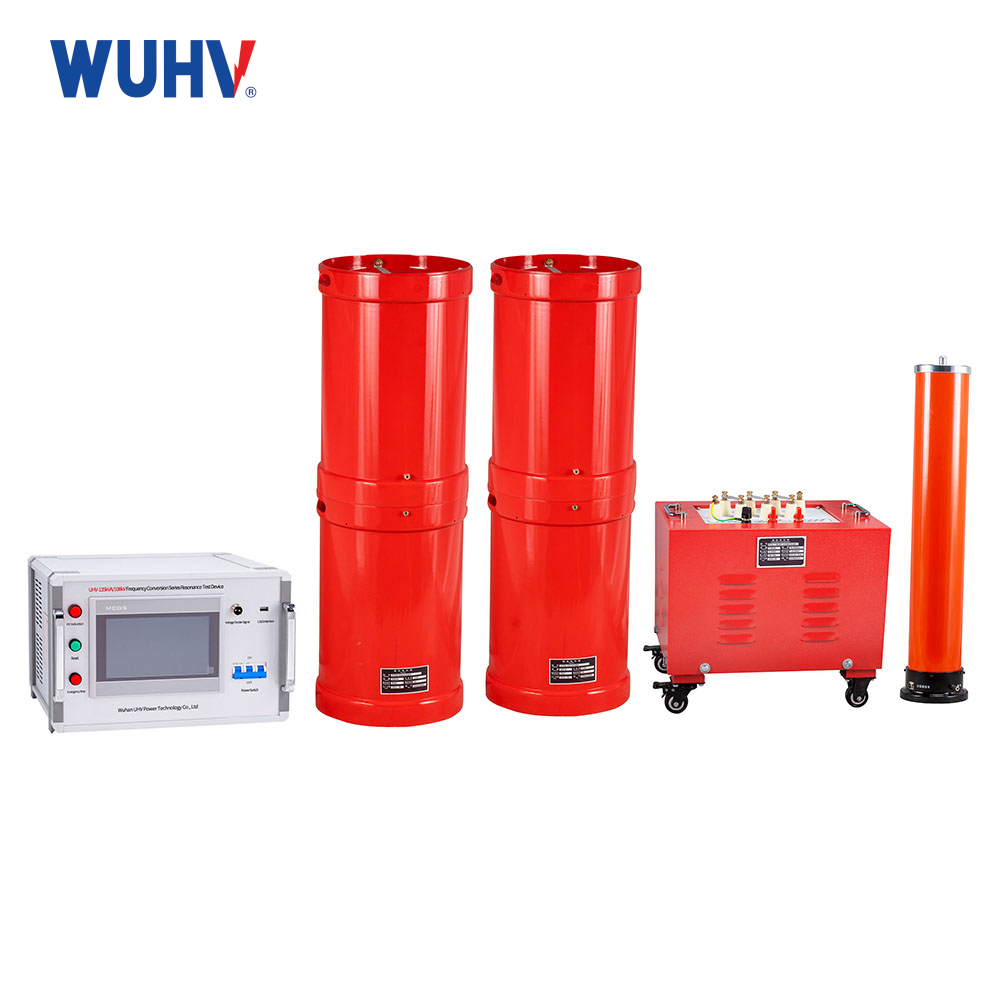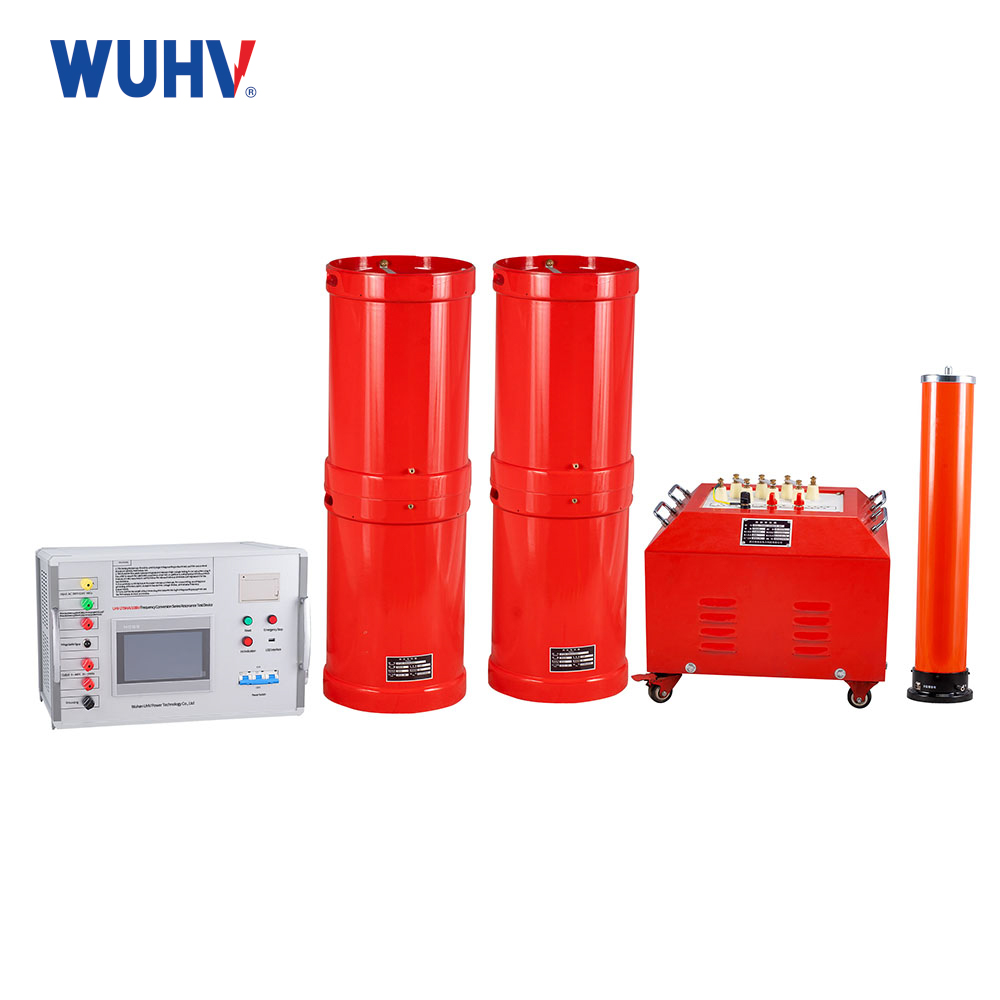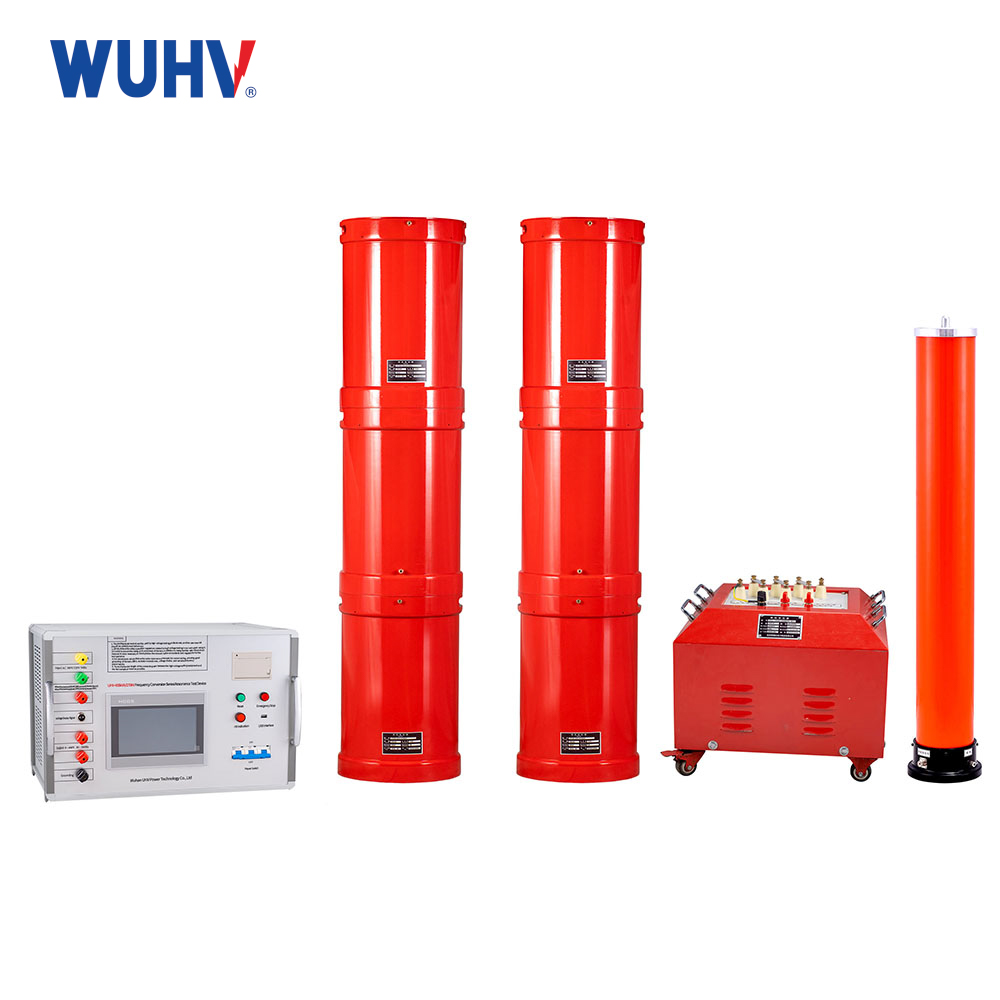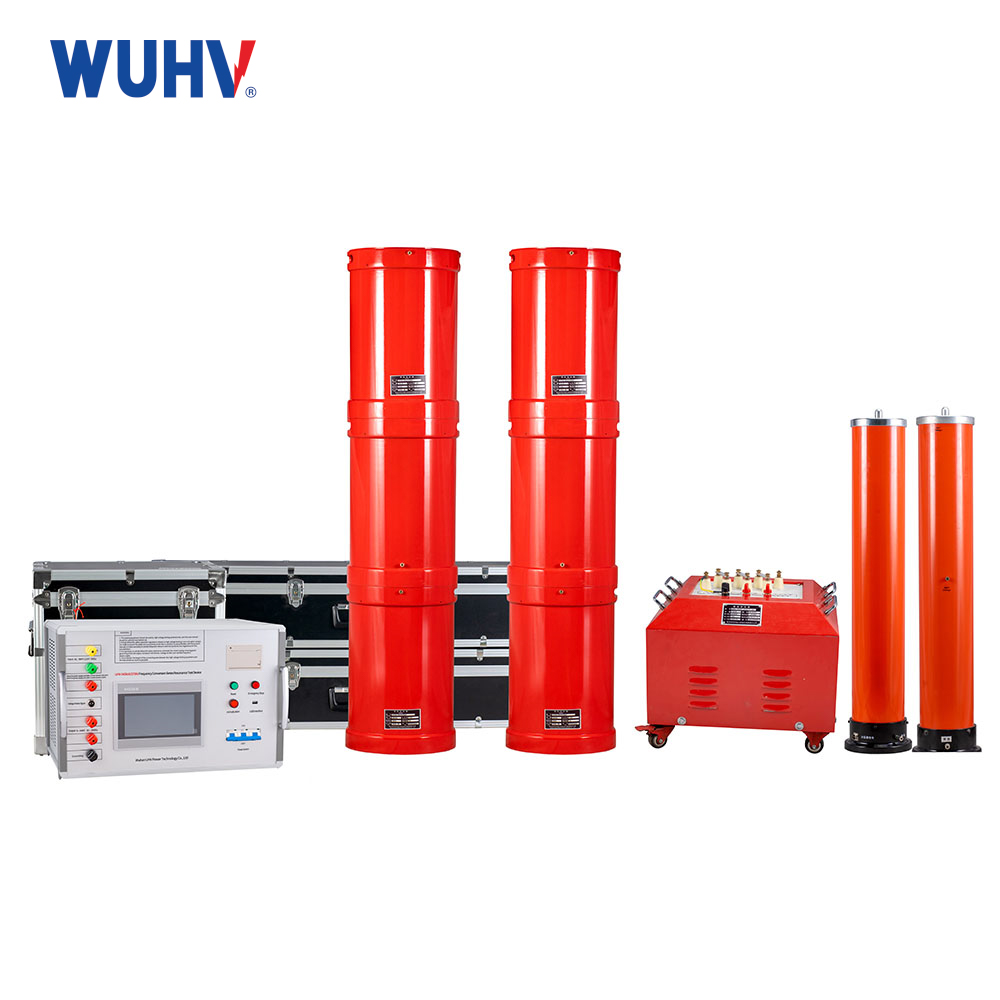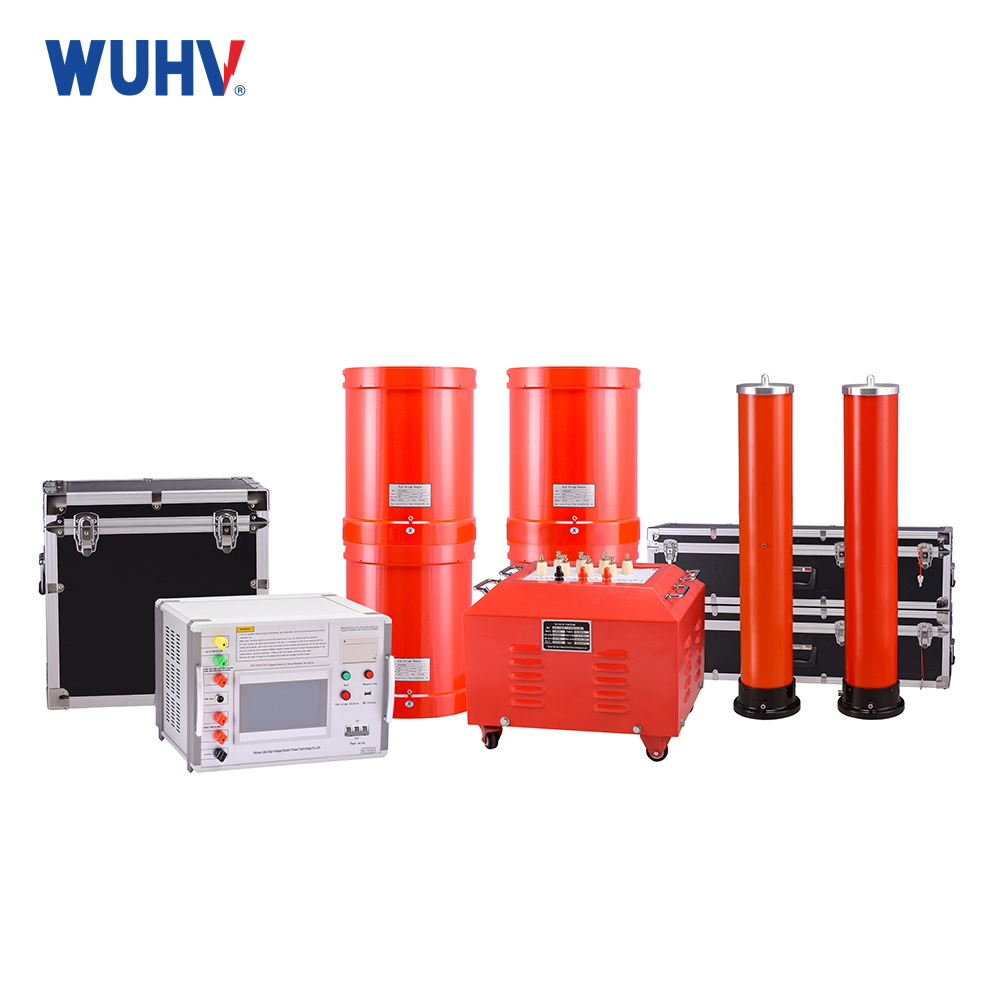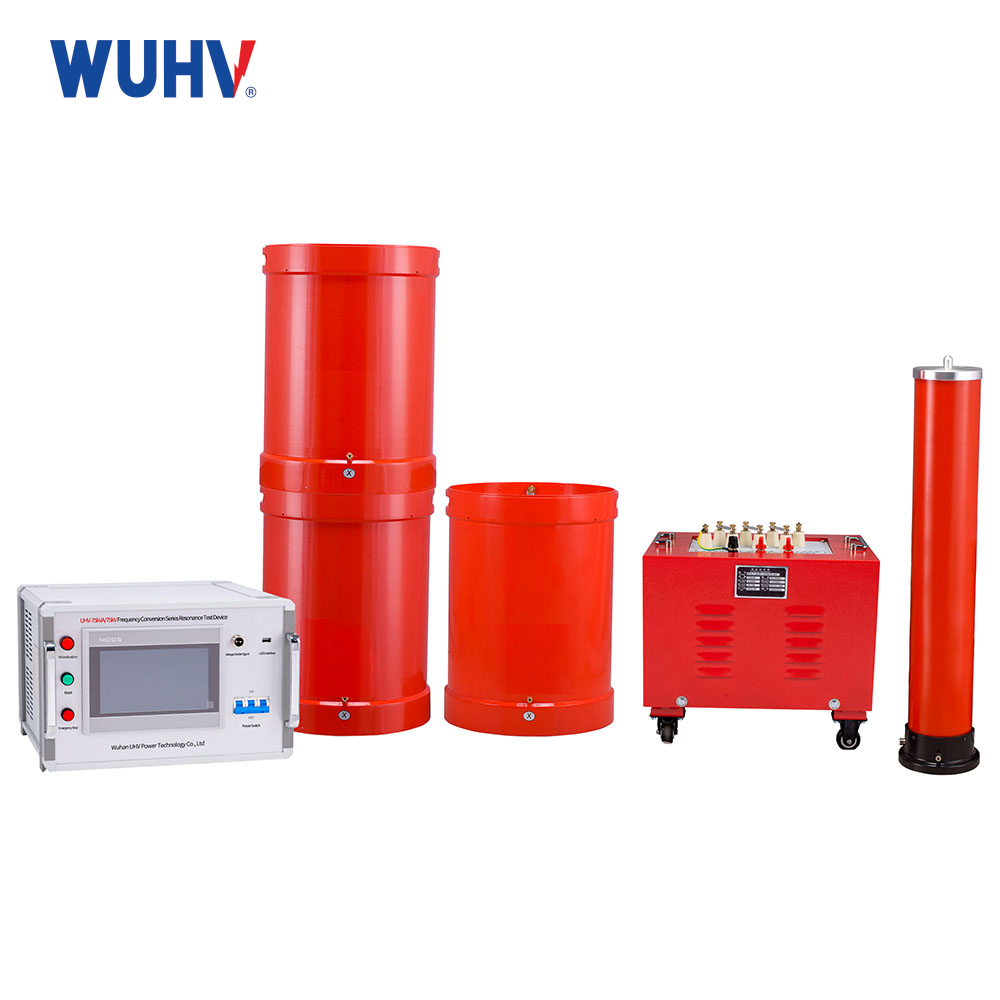
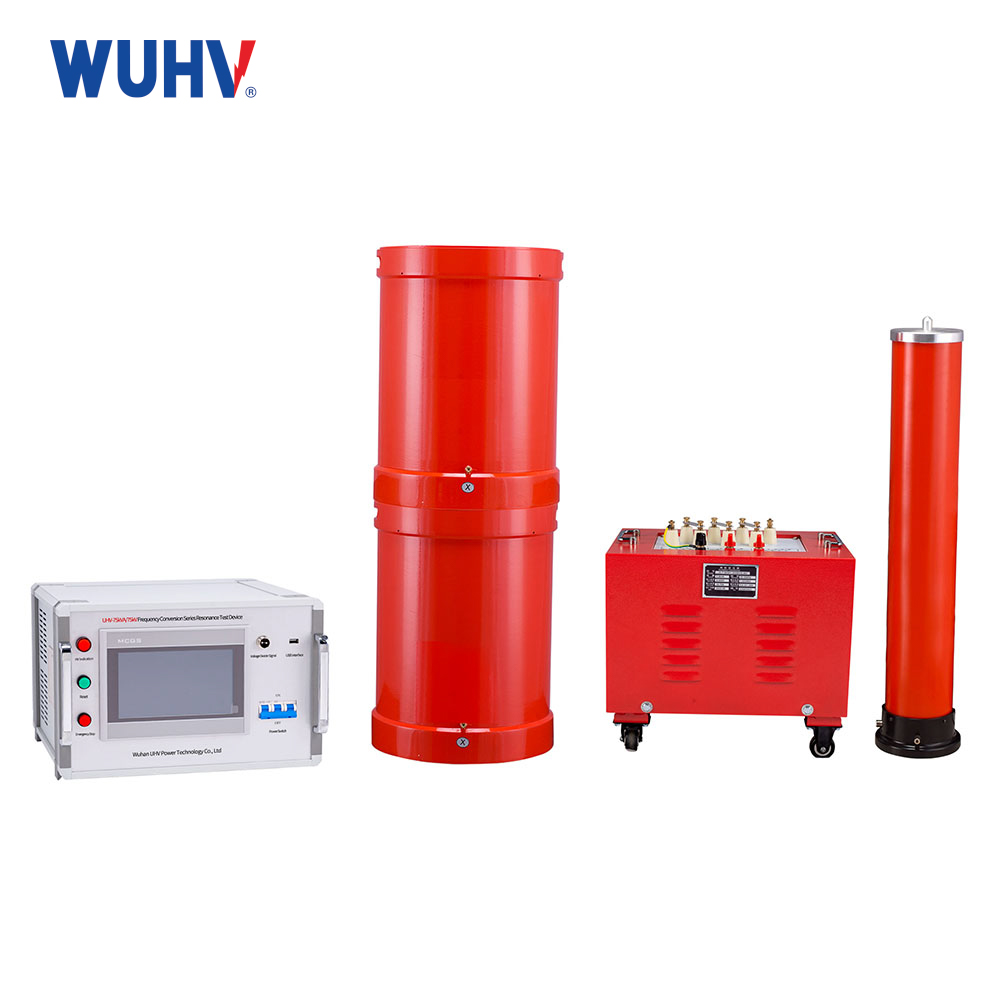
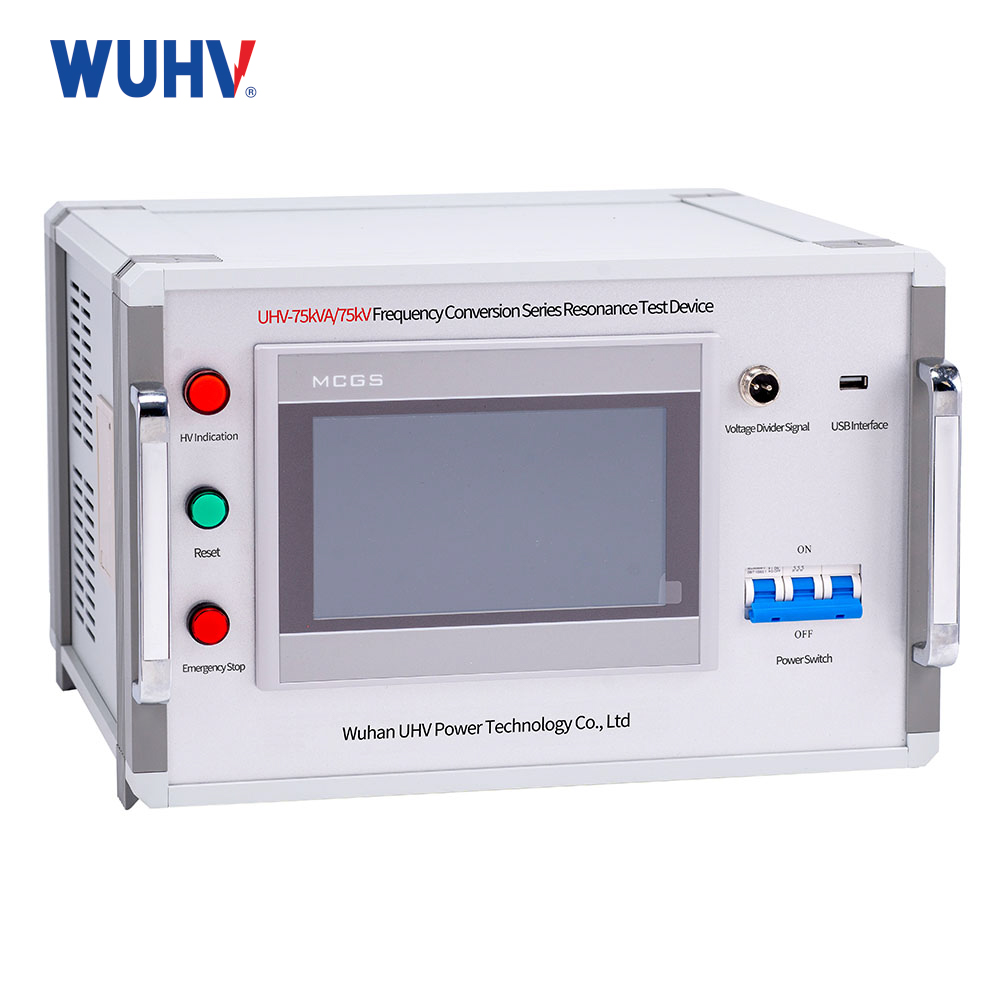
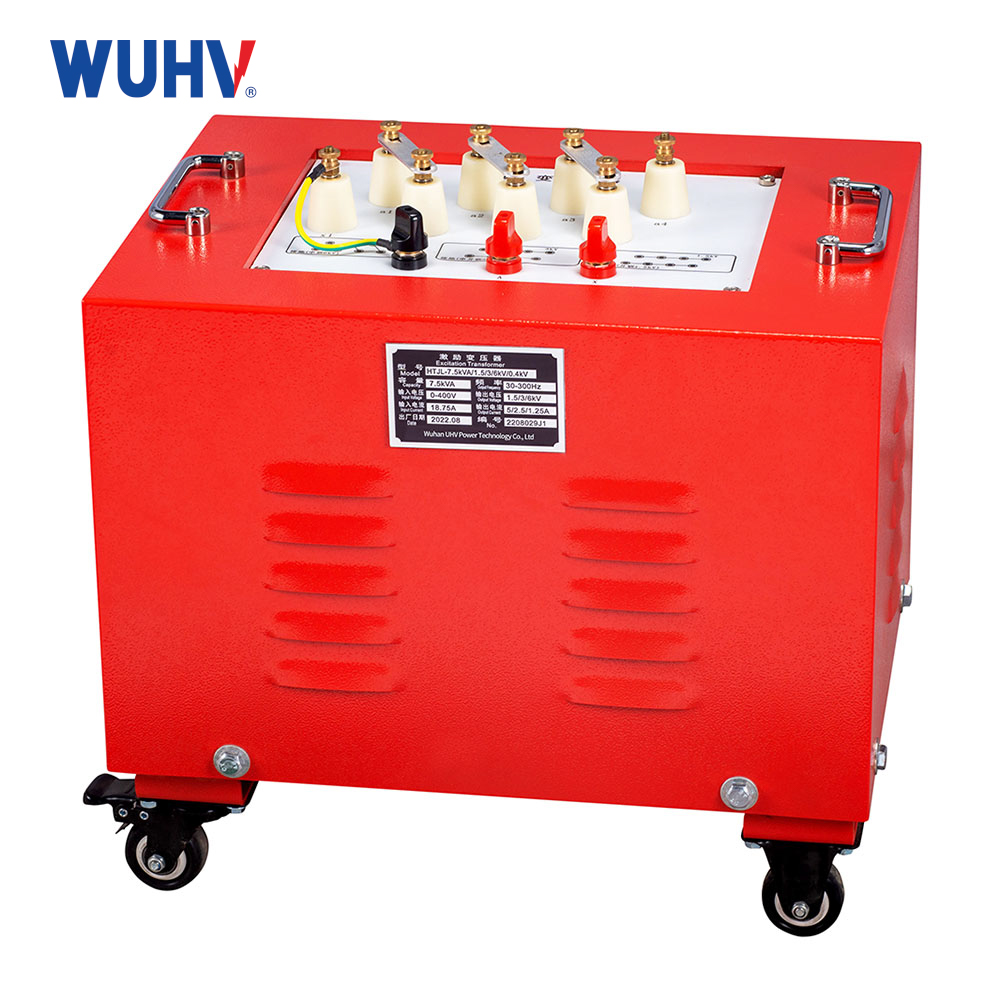
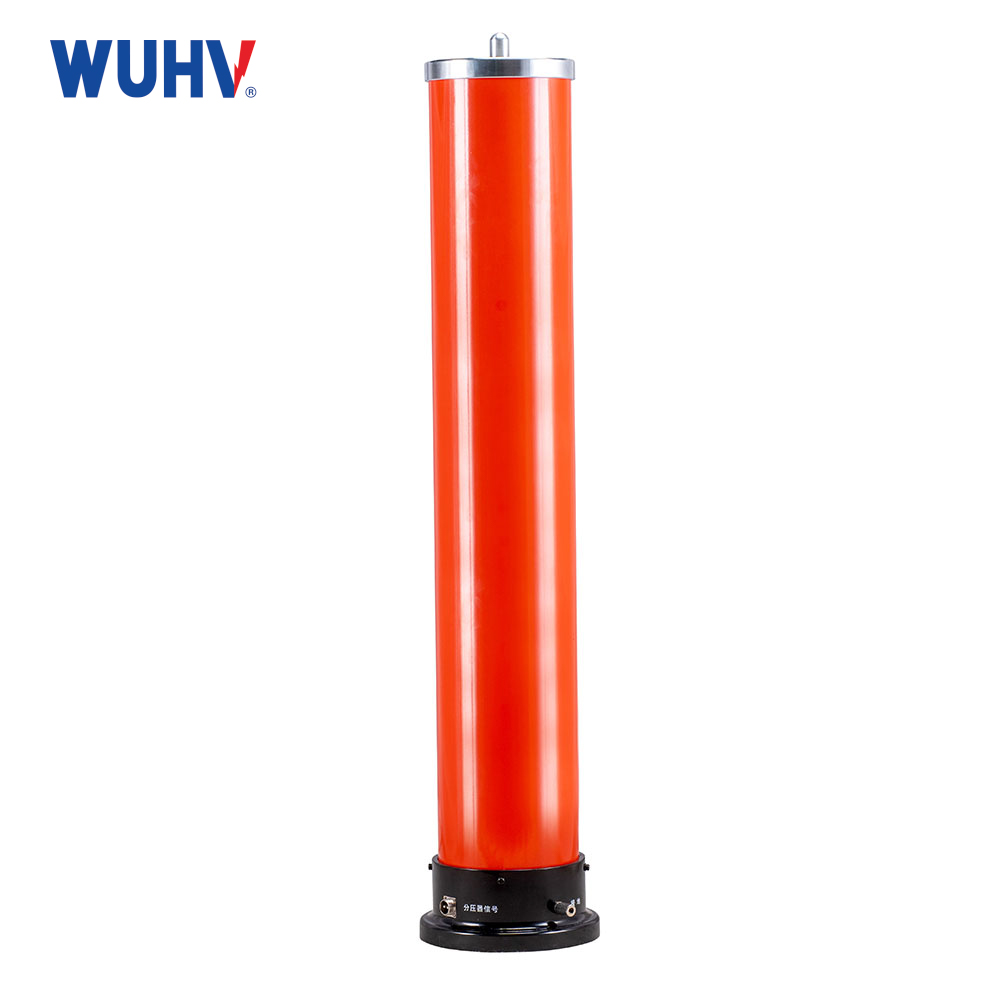


UHV-75kVA/75kV айнымалы ток резонанстық сынақ жүйесі

Өнімге кіріспе
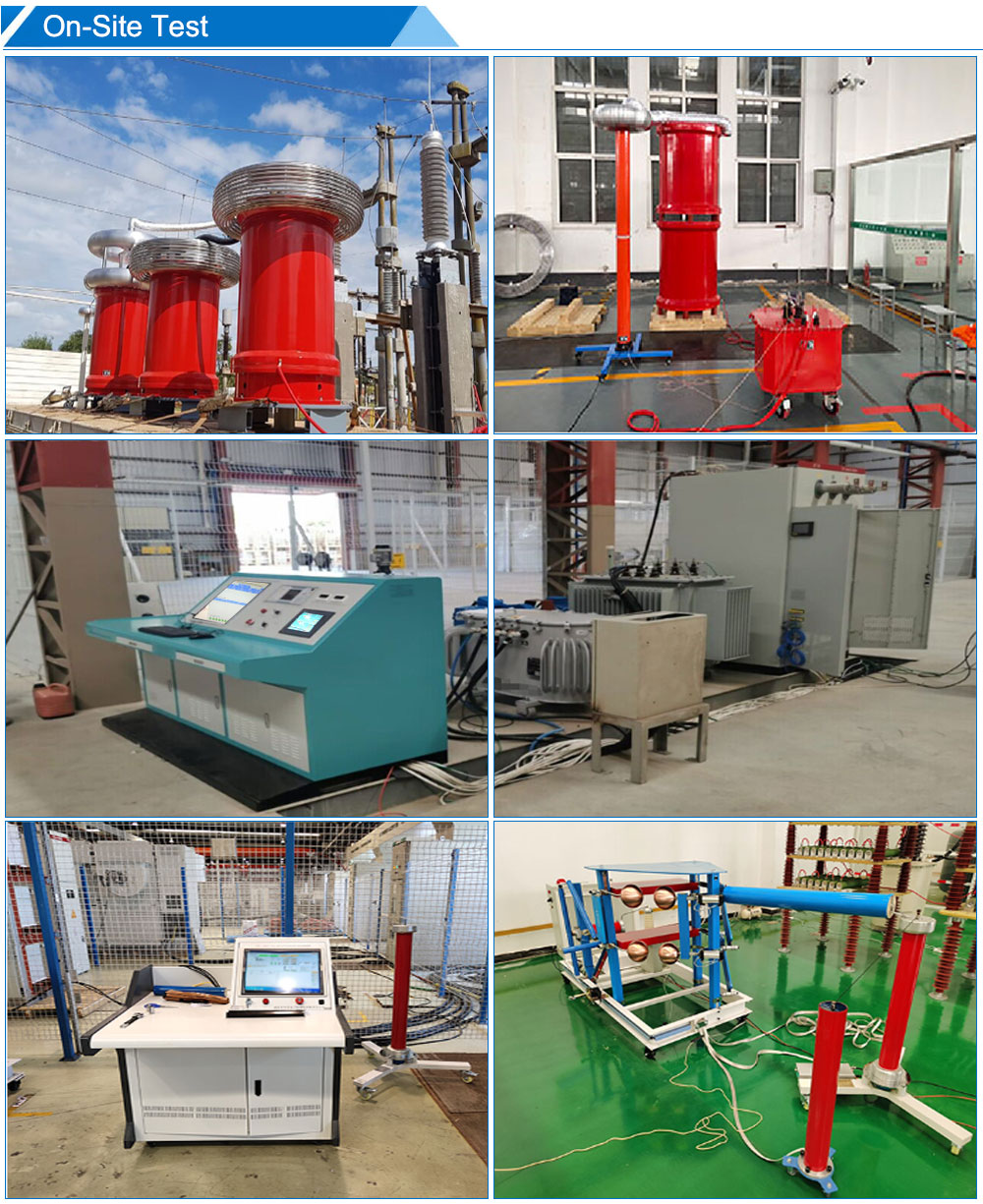
The UHV-75kVA/75kV Series Resonant System is suitable for the handover and preventive testing of large-capacity, high-voltage capacitive test objects. The ac resonant test device manufactures features multiple protection functions such as overvoltage, overcurrent, zero-start, and system detuning (flashover). With its lightweight and portable design, it is highly convenient for on-site application, and incorporates DSP platform technology for enhanced control and performance.

Негізгі техникалық параметрлер мен функциялар
Номиналды қуаты: 75 кВА
Номиналды кернеу: 25к ;75кВ
Номиналды ток: 3A;1A
Өлшеу дәлдігі: Жүйелік RMS деңгейі 1.5
Жұмыс жиілігі: 30-300 Гц
Құрылғының шығыс толқын формасы: Синусоидалы толқын
Сапа факторы: Құрылғы Q≥30(f=45Гц)
Толқын пішінінің бұрмалану жылдамдығы: Шығыс кернеуінің толқын пішінінің бұрмалануы ≤1%
Кіріс қуат көзі: бір фазалы 220 немесе үш фазалы 380 В кернеу, жиілігі 50 Гц
Жұмыс уақыты: Номиналды жүктеме кезінде үздіксіз 60 минутқа рұқсат етіңіз; Шамадан тыс қысым 1,1 рет 1 минут
Температураның көтерілуі: Номиналды жүктеме астында 60 минут бойы үздіксіз жұмыс істегеннен кейін температураның көтерілуі ≤65K
Қорғаныс функциясы: шамадан тыс кернеу, шамадан тыс ток, нөлдік іске қосу, жүйенің сәйкес келмеуі (флэш-овер) және басқа қорғаныс функциялары
Ambient temperature: -20℃-55℃
Салыстырмалы ылғалдылық: ≤90% RH
Биіктік: ≤3000 м
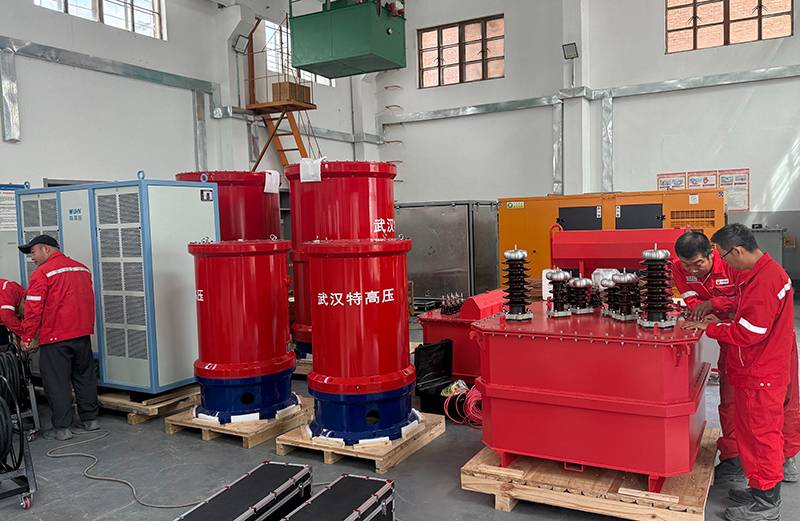
Comparison between series resonance and traditional power frequency test transformers
1. Power supply capacity requirement (the biggest difference):
The ac resonant voltage withstand device exploits resonance, so its required power supply capacity is only 1/Q of the output capacity (Q is typically ≥30). For testing a long cable, series resonant test equipment may need only a few tens of kVA, whereas a direct power‑frequency transformer would require thousands of kVA – often impossible to source or transport on site.
2. Size and weight:
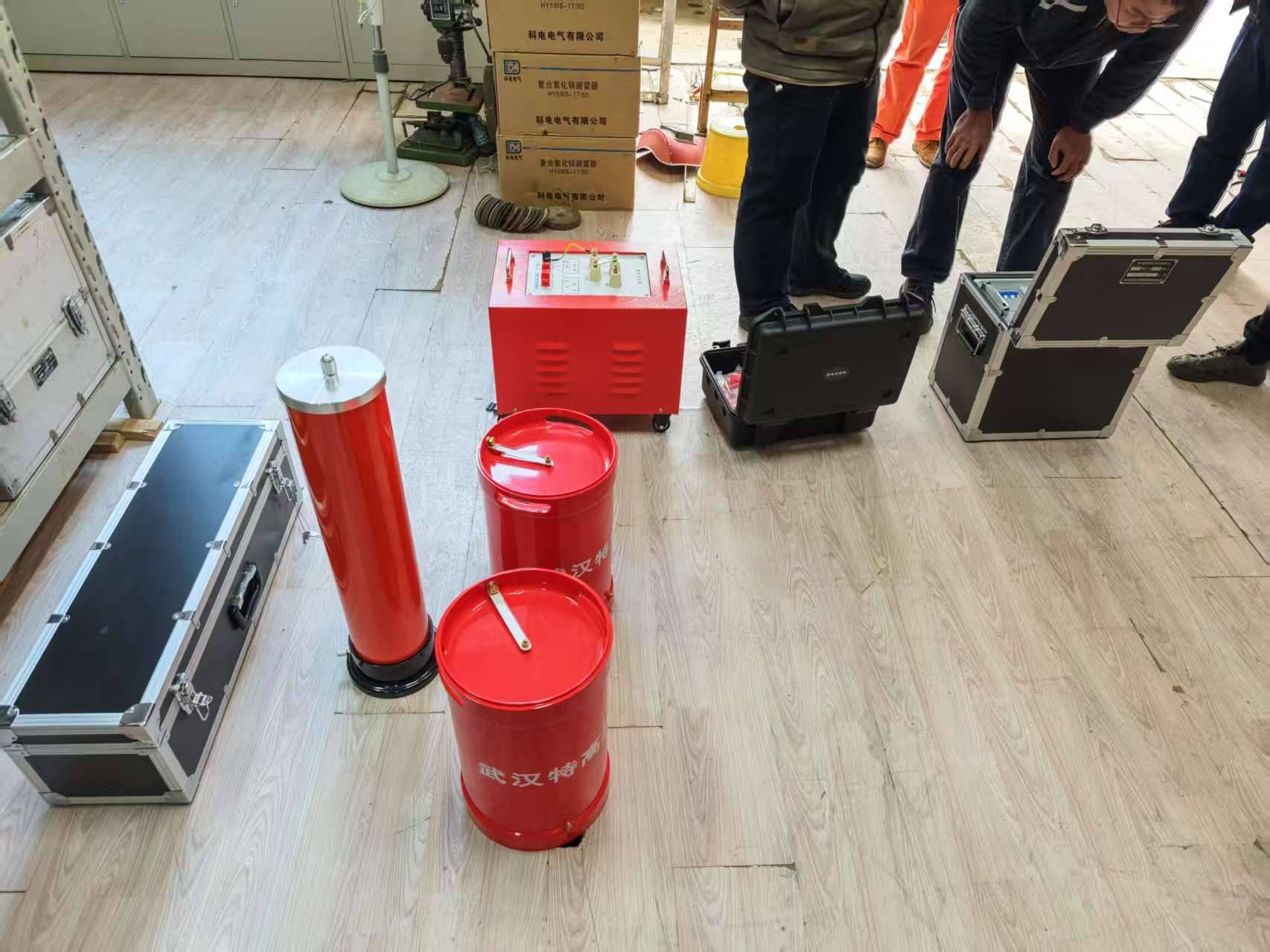
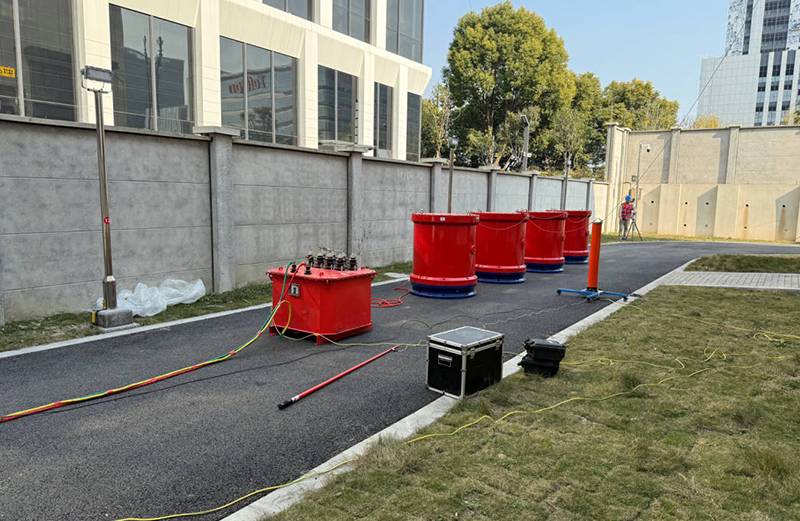
ac series resonant device weighs only 1/5 to 1/10 of a power‑frequency transformer of the same voltage class, making it highly suitable for field outdoor handling. In contrast, the power‑frequency transformer is as bulky as a steel tower and is usually fixed in a laboratory.
3. Safety behaviour upon test object breakdown:
This is the “trump card” of series resonance. When the test object (e.g., a cable) breaks down under high voltage, the resonant circuit immediately detunes, the current drops sharply, and the arc extinguishes almost instantly – without producing destructive overvoltages. A power‑frequency transformer, however, is a “stiff” source: once breakdown occurs, the short‑circuit current is huge, which can easily burn the weak point of the test object and cause “secondary aggravated damage”.
4. Application scenarios:
ac resonant test system supplier is specialised for large‑capacity, high‑voltage test objects (long cables, GIS, generators). Power‑frequency transformers are suitable for small‑capacity, low‑voltage items, or for specific old‑style equipment that strictly requires a 50 Hz frequency.
Application of Series Resonance in High Voltage Electrical Equipment Testing
AC voltage withstand test: Using series resonance to generate high power frequency voltage, conduct AC voltage withstand test set on capacitive specimens with large capacity and high voltage. This method can effectively detect hazardous concentrated defects in equipment and is the most effective and direct way to test the insulation strength of electrical equipment.
Handover and preventive testing of equipment such as transformers, cables, and motors: Through series resonance testing, the electrical performance of the equipment can be comprehensively evaluated to ensure its safe operation.
Advantages of Series Resonant Devices
1. High efficiency: In the series resonant state, the circuit impedance is ideally small, and the ratio of current to voltage reaches its maximum, thereby improving the overall efficiency of the circuit.
2. Low losses: Because the circuit impedance is small and the current-to-voltage ratio is large in the series resonant state, the losses within the circuit are also relatively low.
3. Stability: The series resonant test device factory can effectively suppress noise interference in the circuit, ensuring circuit stability.
 |  |
Common problems with series resonance
Q1: What is "resonance"? Why can it generate high voltage?
A1: Resonance refers to the periodic exchange of energy in a circuit composed of an inductor (L) and a capacitor (C) when the frequency of an external power source is equal to the natural resonant frequency of the circuit, resulting in a voltage and current far greater than the power source voltage in the circuit.
Q2: What are the risks encountered during resonance withstand voltage testing?
A2: The main risks include overvoltage breakdown, overcurrent damage to equipment, and electric shock accidents caused by improper operation. Therefore, it is necessary to ensure that the device has complete protection functions and is operated by professionals.
Q3: Is the variable frequency series resonant device suitable for all voltage levels of equipment?
A3: Variable frequency series resonance technology is suitable for various types of power equipment with voltage levels of 35kV and above, but the specific model selection needs to be determined based on the capacitance and test voltage requirements of the tested equipment.
Q4: How to ensure the accuracy of the results when conducting frequency conversion series resonance tests?
A4: Ensuring good grounding of the equipment before the test, selecting appropriate test voltage and frequency, accurately measuring capacitance, and paying attention to the influence of environmental factors, in conjunction with the use of qualified measuring instruments, is the key to ensuring the accuracy of the results.
Q5: What should be paid attention to in the daily maintenance of the variable frequency series resonant device?
A5: Regularly check the appearance of the equipment, whether the connecting wires are intact, clean the surface of the equipment, check the working status of the components in the control box, and ensure the normal operation and long life of the equipment.
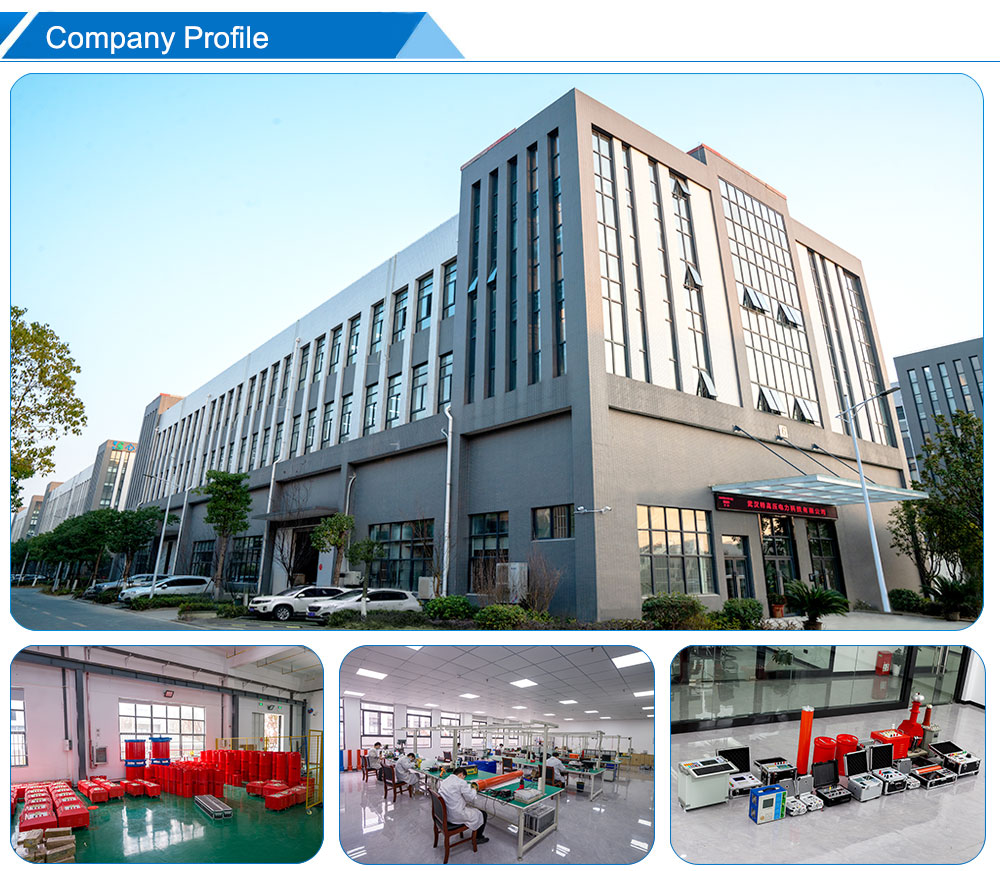
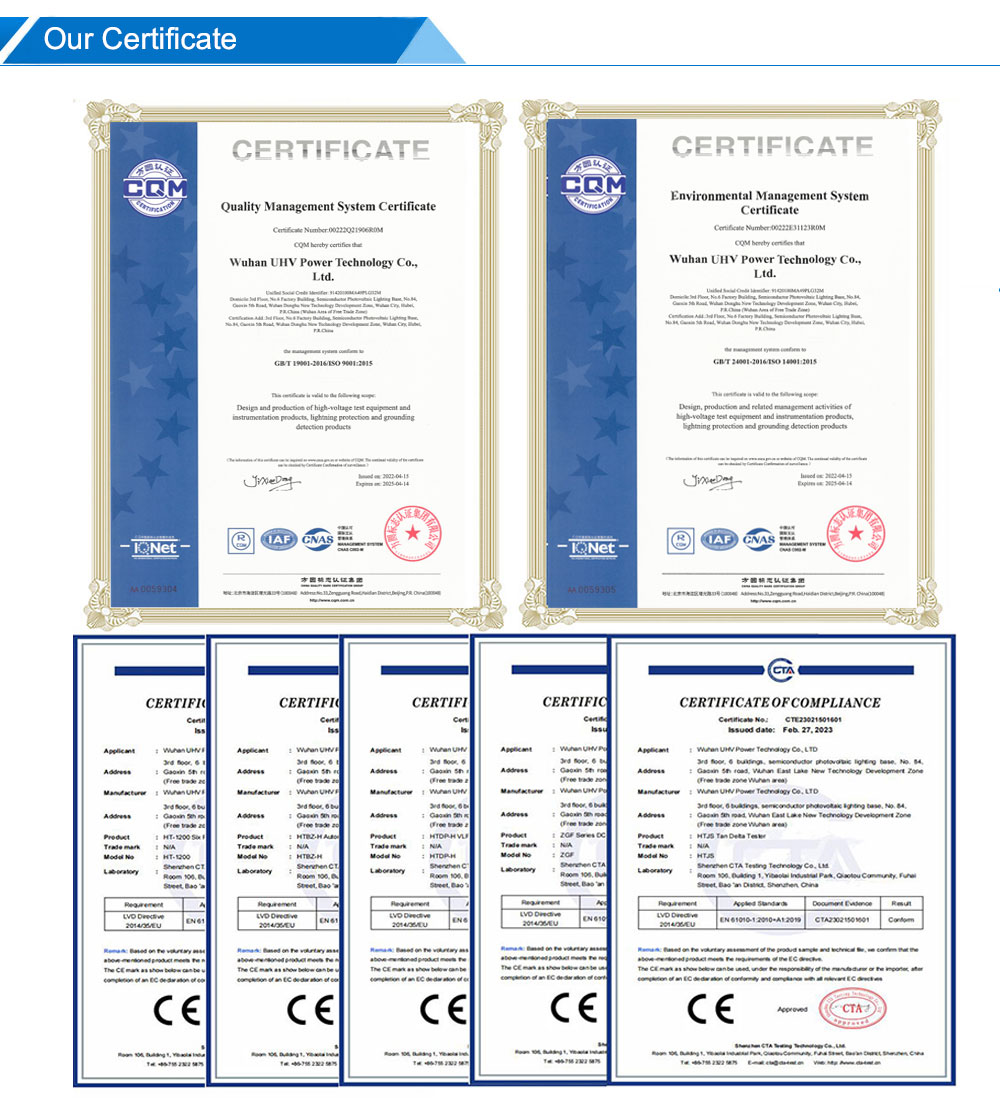
Wuhan UHV Power Technology Co., Ltd. has been deeply engaged in the field of high-voltage power testing equipment for over 20 years.
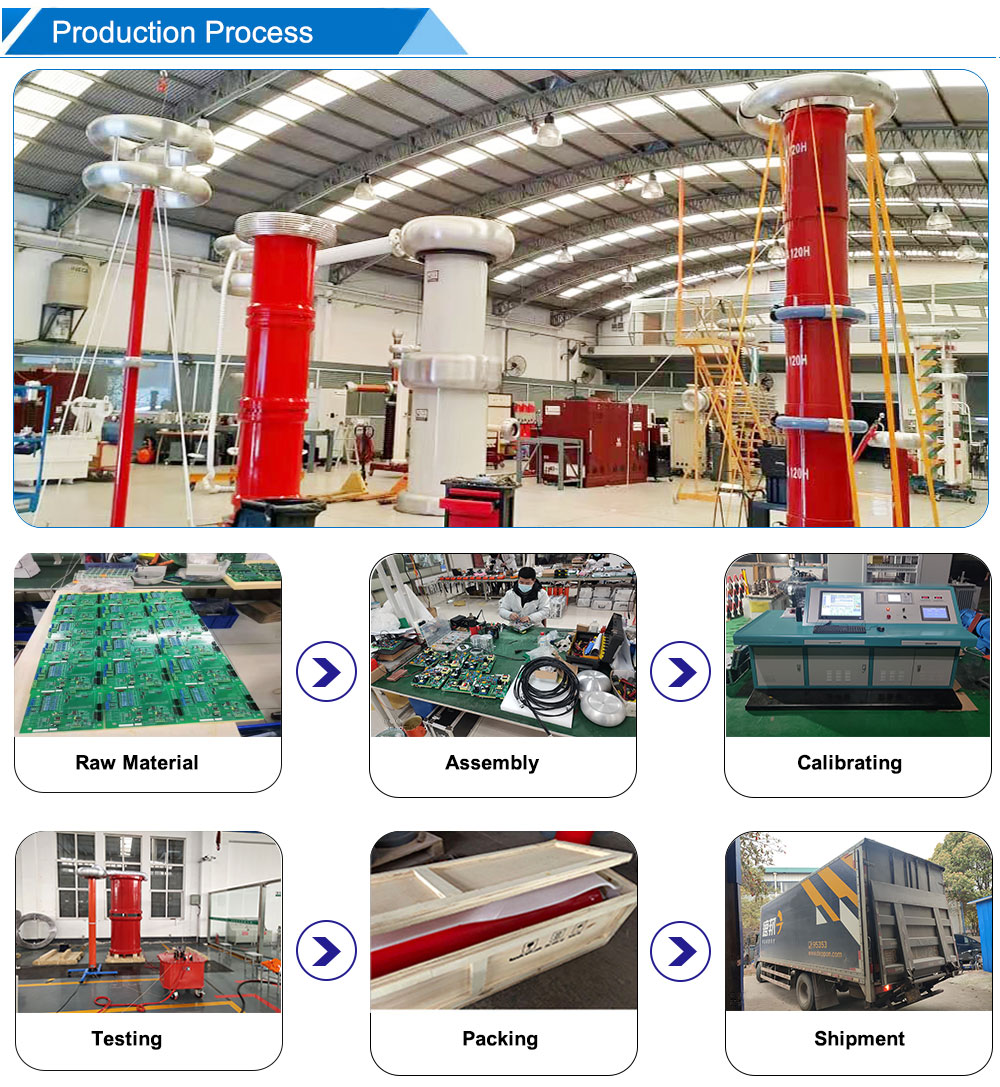
As a direct-sale manufacturer with our own factory, we combine large-scale production capacity with a strict quality control system, ensuring stable and reliable product performance while offering you more competitive factory-direct prices.
Our core products cover a wide range of high-voltage testing equipment to meet diverse testing requirements. In addition, we can provide professional technical support and flexible customized solutions according to different project specifications.